Vehicle-Integrated
Compute —
3 Generations
Three cars, three completely different packaging constraints. Gen 1: structural relocation and body filler bezel fabrication. Gen 2: factory PCB reverse engineering to inject audio into a head unit with no aux input, plus full hardware modification of the phone. Gen 3: thermal management via dummy battery and battery relocation, fully parametric CAD enclosure, and a complete context-aware automation system that predated Android Auto's equivalent capabilities.
Generation 1: Scion xB, Proof of Concept
Smartphones and tablets had already surpassed what any aftermarket head unit offered, larger screens, internet streaming, real-time navigation, app ecosystems. Older cars had none of it. The gap between what existed in a pocket and what existed in a dashboard was large and unnecessary. This project started from the straightforward observation that it shouldn't be that way.
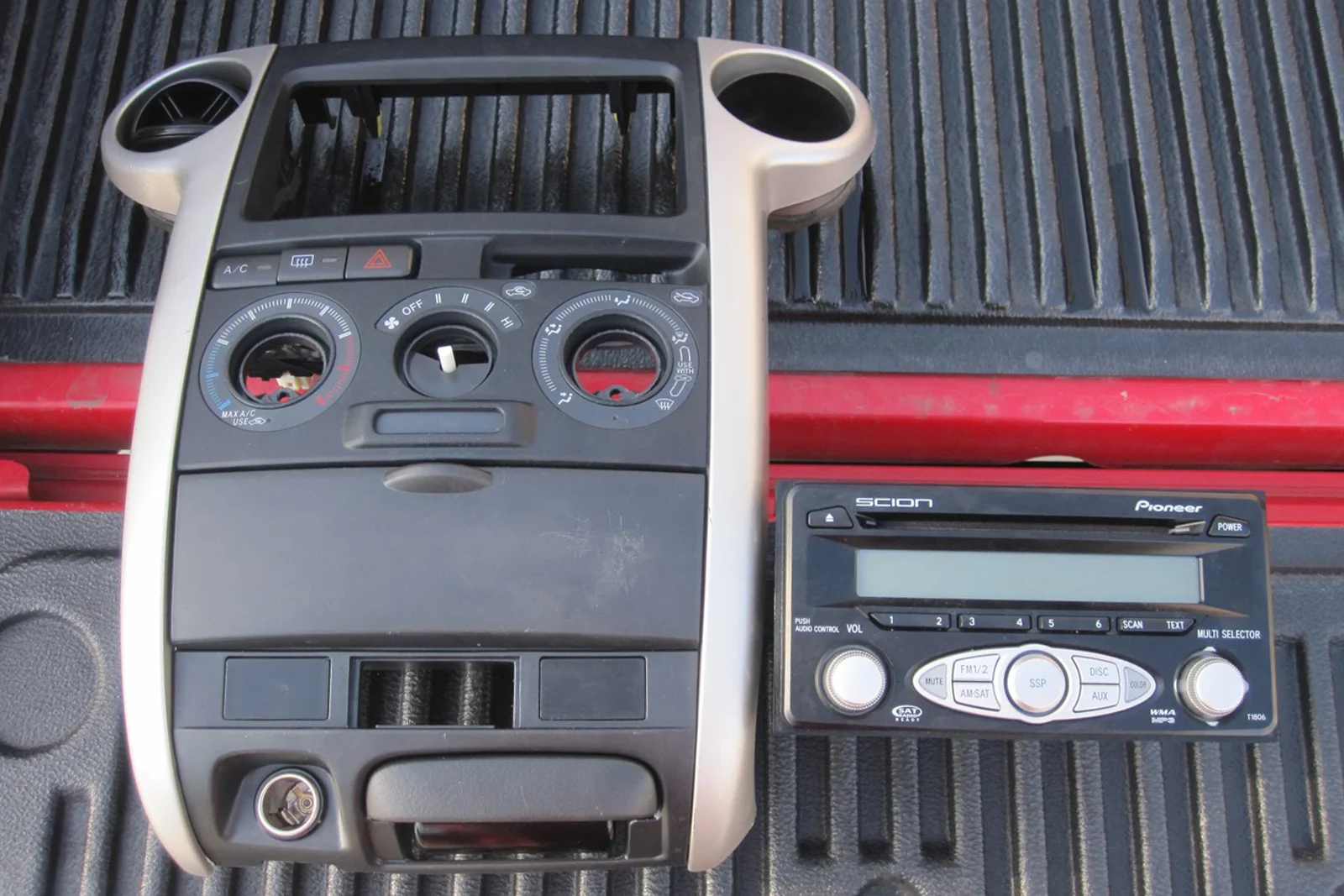
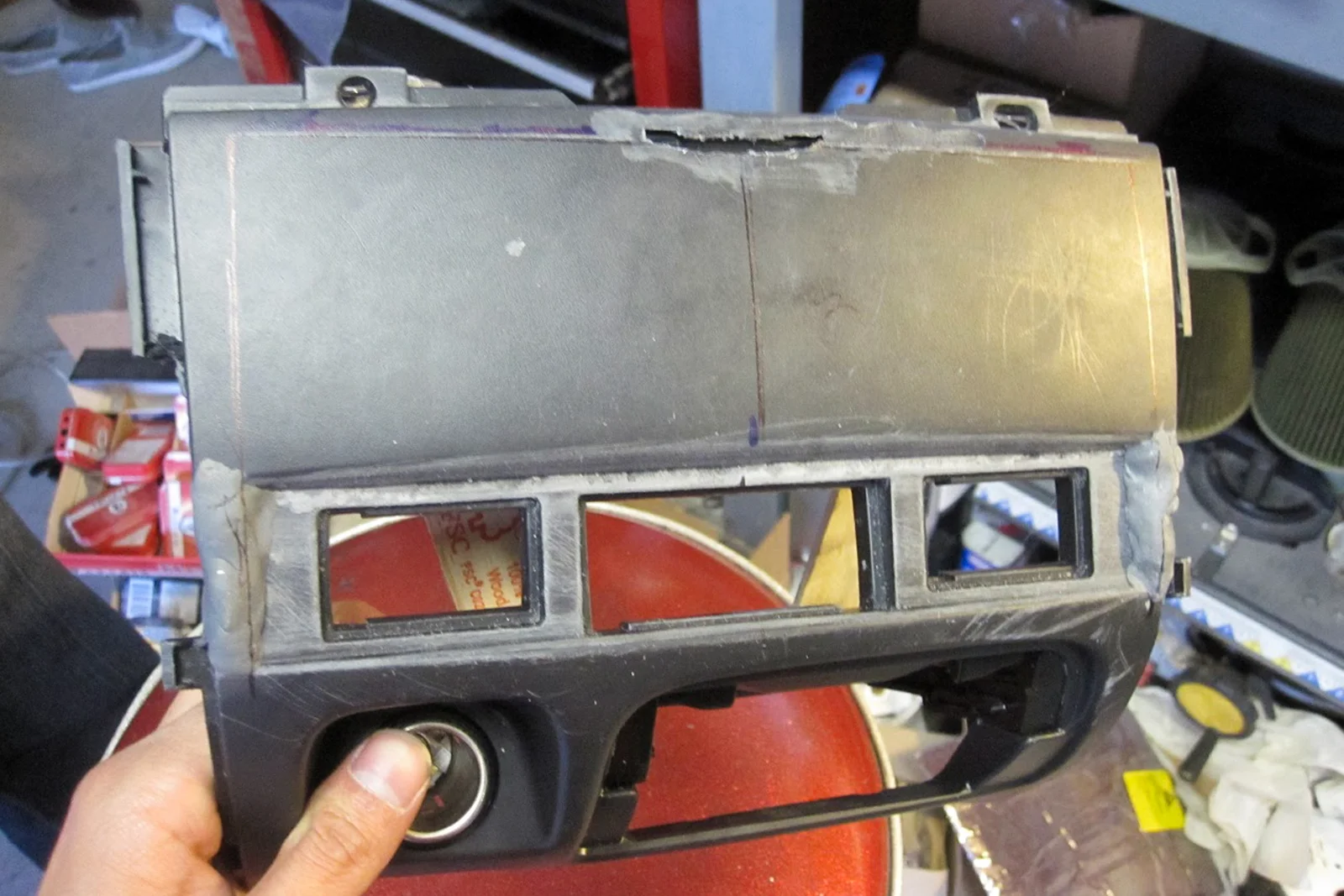
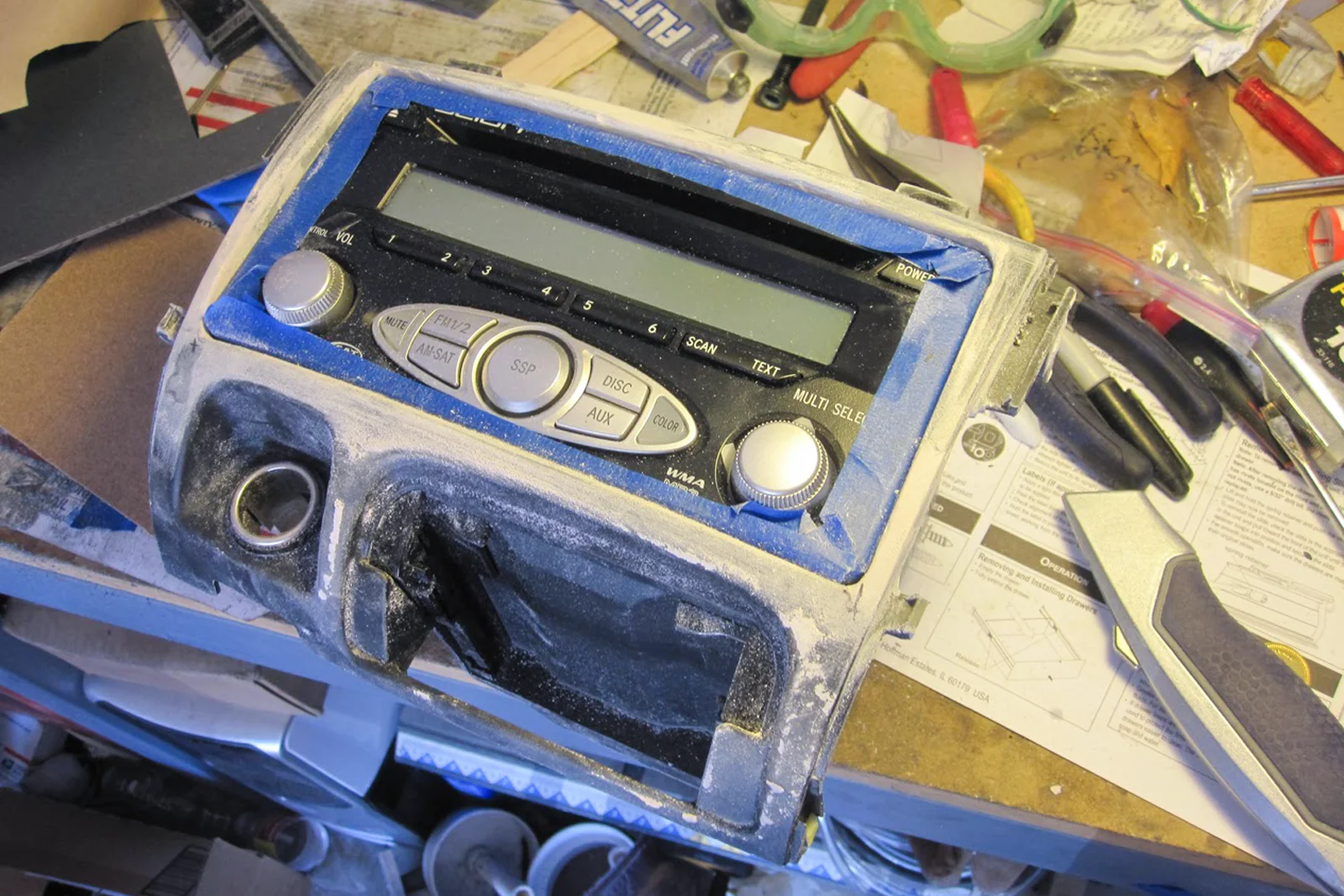
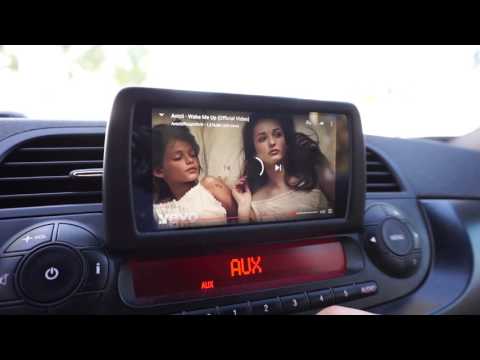
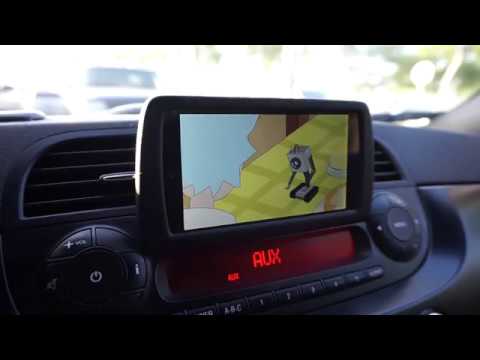
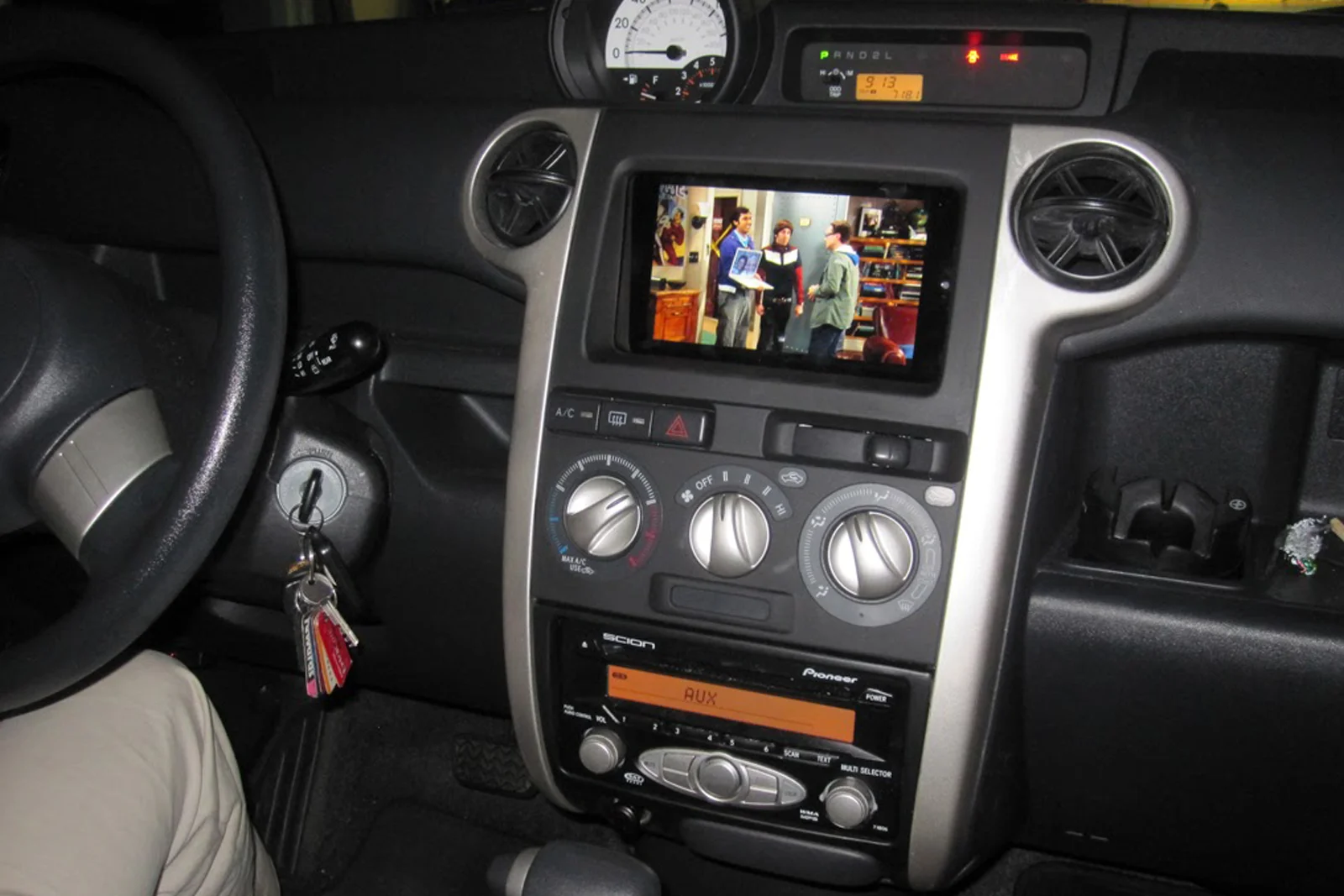
The Scion xB had a double-DIN radio slot high on the center console, almost exactly the right cutout size for a Google Nexus 7 tablet. The problem was the existing head unit was already there and worth keeping for audio amplification. The center console had a storage compartment below the AC vents. Rough measurements confirmed it could just barely fit the double-DIN head unit in the lower position. Cut out the storage bin, fabricated aluminum mounting brackets to relocate the head unit into the lower cavity. The double-DIN slot at the top was now free.
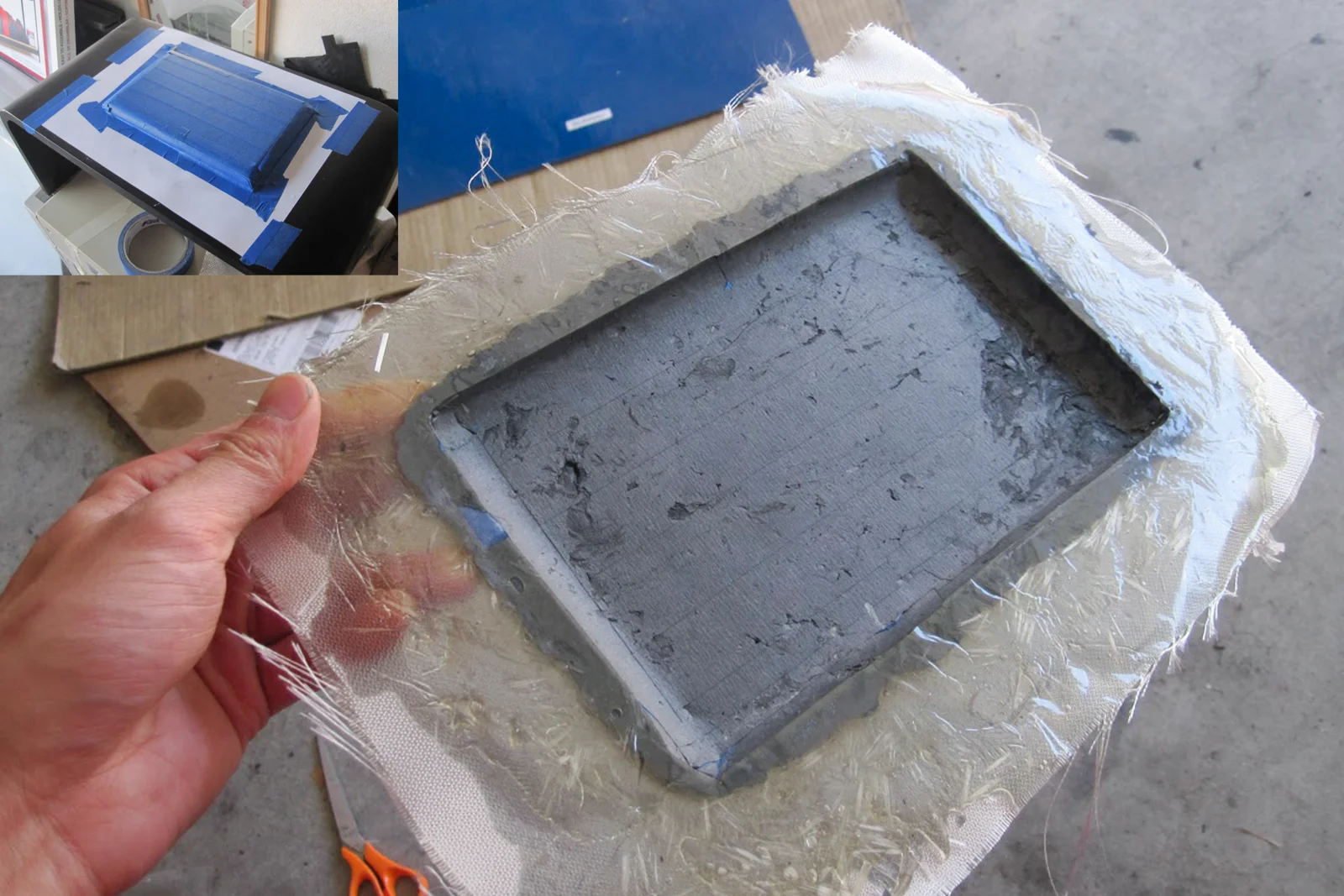
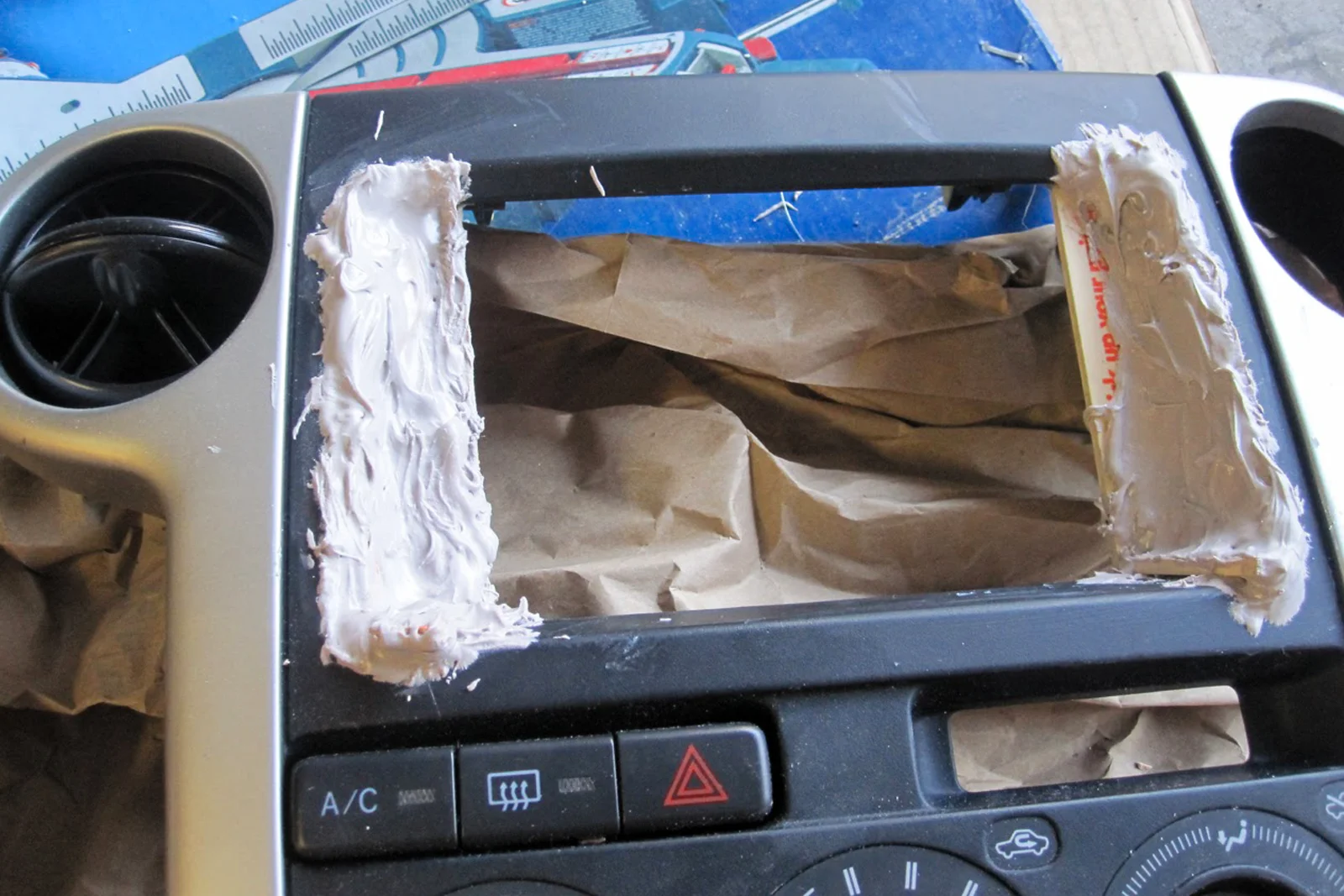
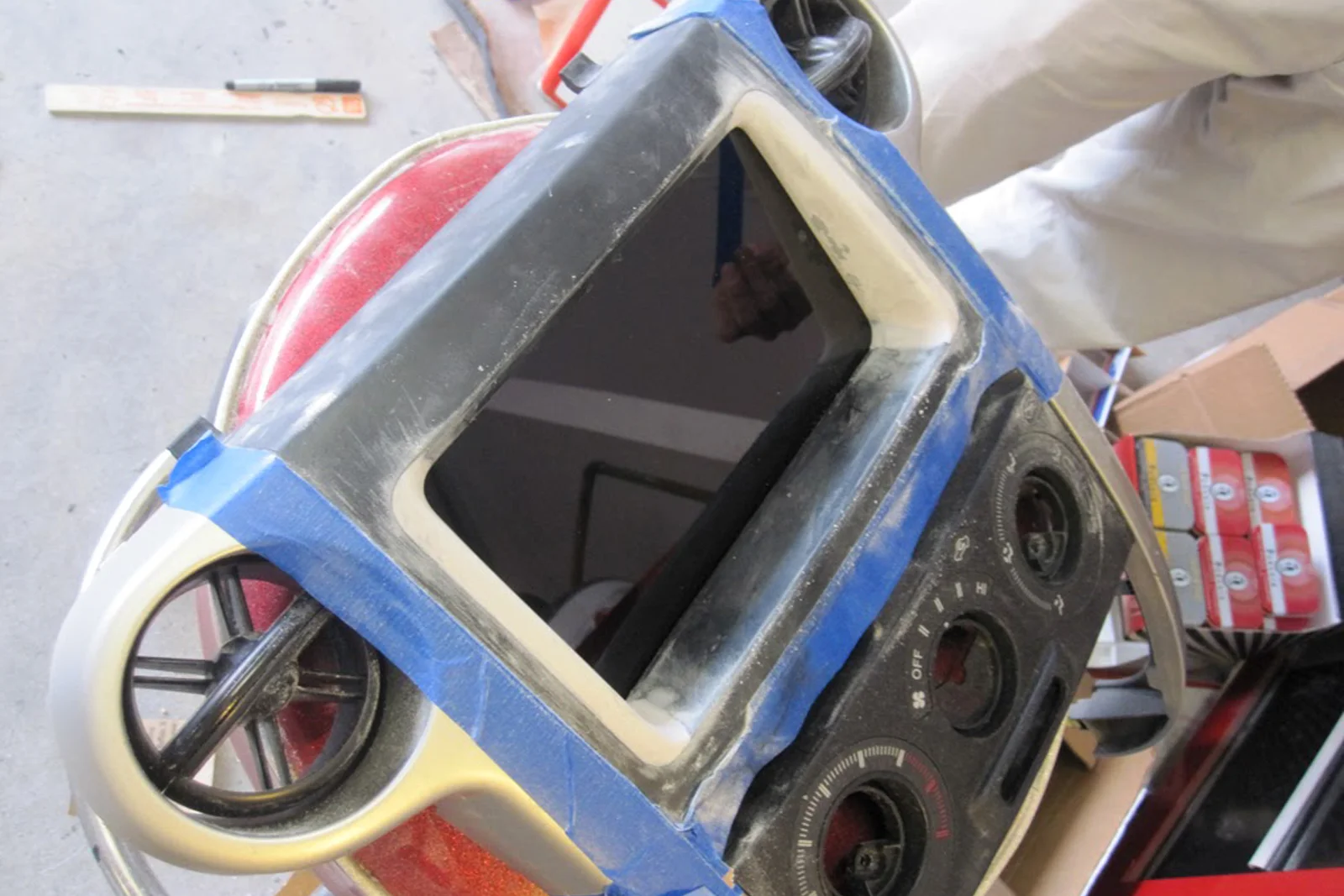
Hand-shaped a new bezel for the relocated head unit using automotive body filler. Fabricated a fiberglass backing plate contoured to the Nexus 7's rear face to mount it at the correct depth in the freed slot. Wired the tablet's headphone output into the factory head unit's audio input so music played through the car speakers. Reshaped the upper slot into a fitted bezel for the Nexus 7 using body filler, sanded everything smooth, painted factory matte black. The result looked like it came from the factory. Functional tablet navigation and Spotify streaming in the center stack. Good proof of concept, but the integration was shallow. The phone and the car were still two separate systems connected by a cable.
Generation 2: Toyota Tacoma, PCB Reverse Engineering and Full Hardware Integration
The Tacoma had no relocatable head unit and no aux input. The dashboard layout didn't allow a tablet. The left AC vent was positioned at ideal eye height for a display and was approximately the right size for a smartphone in landscape orientation. That became the target.
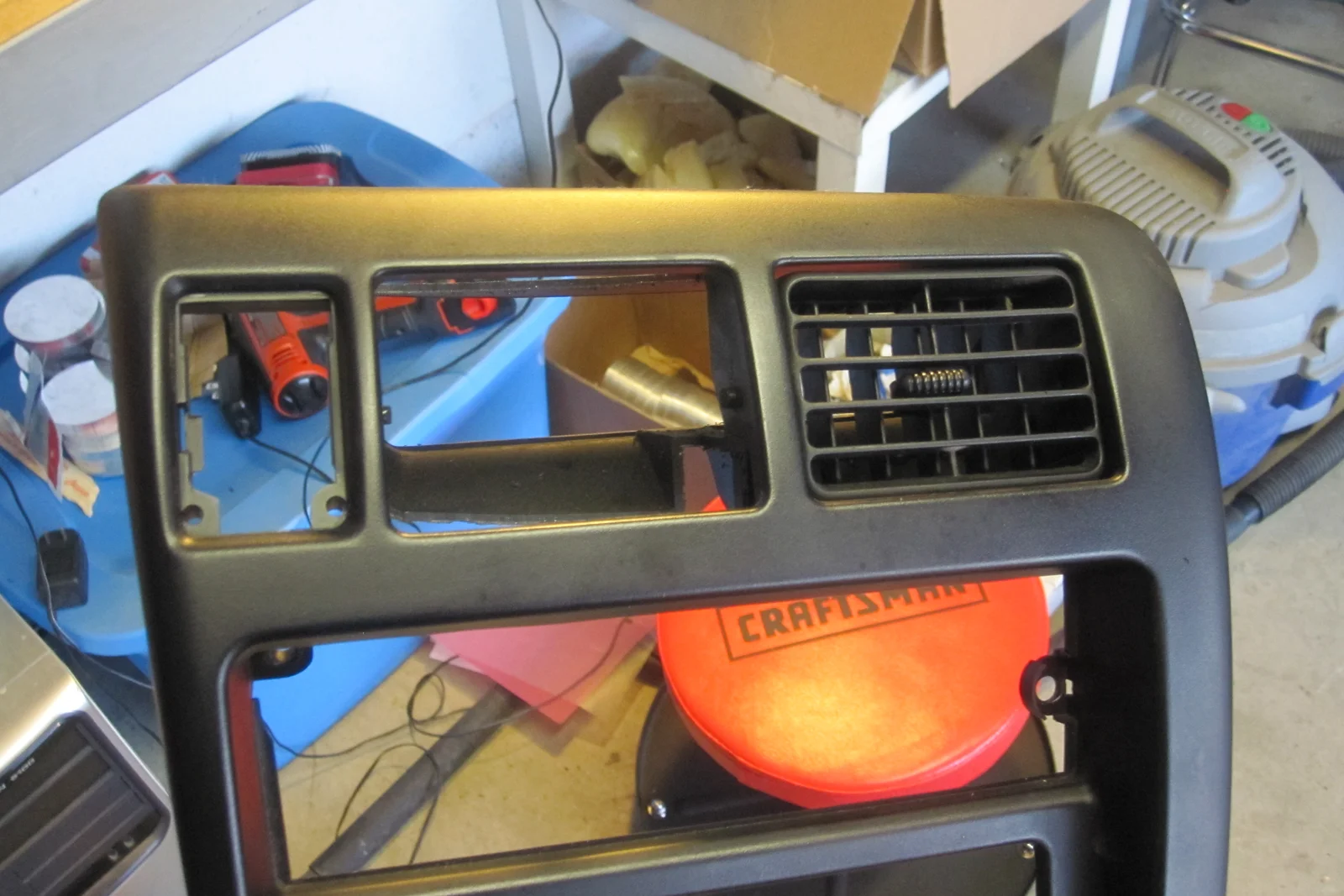
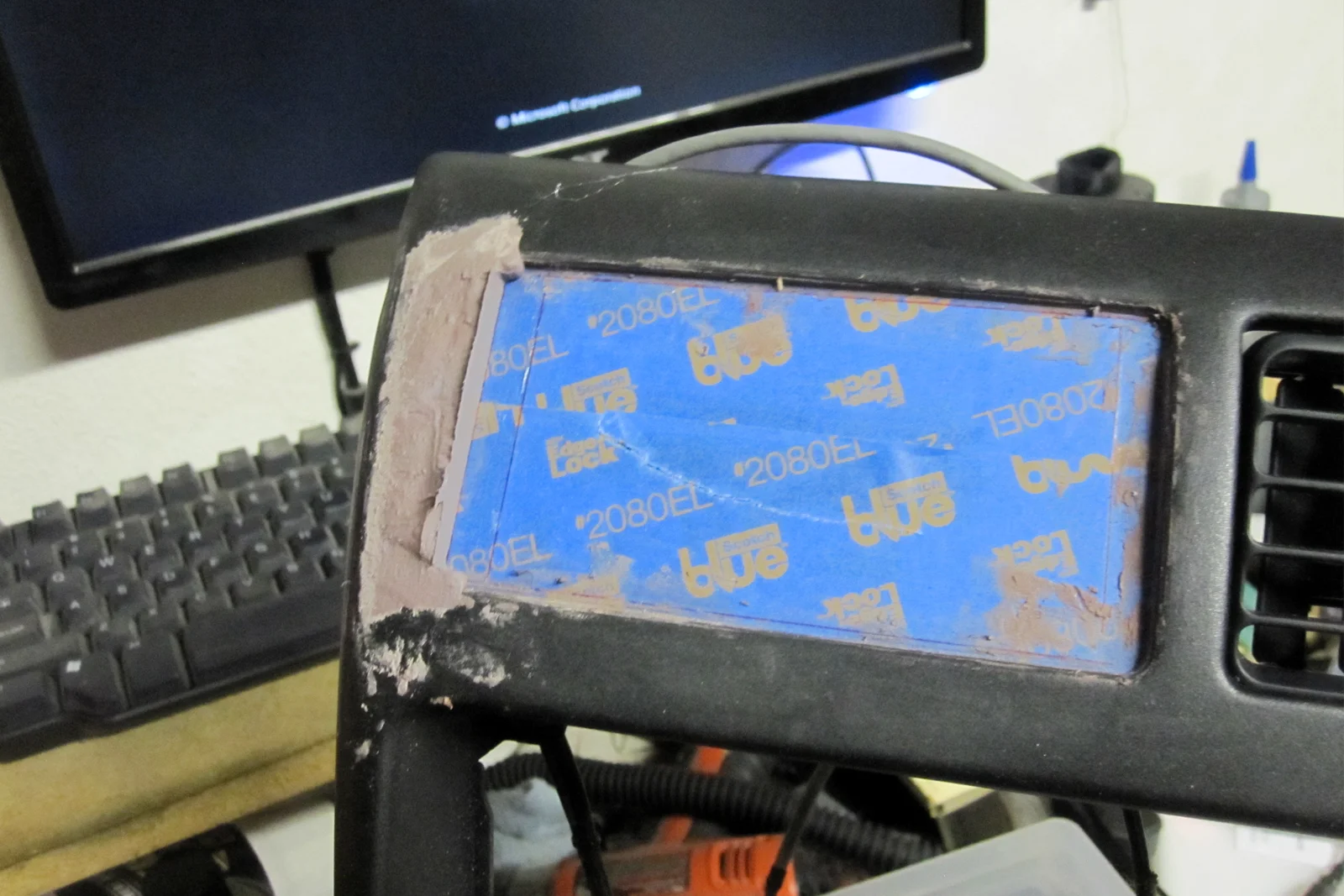
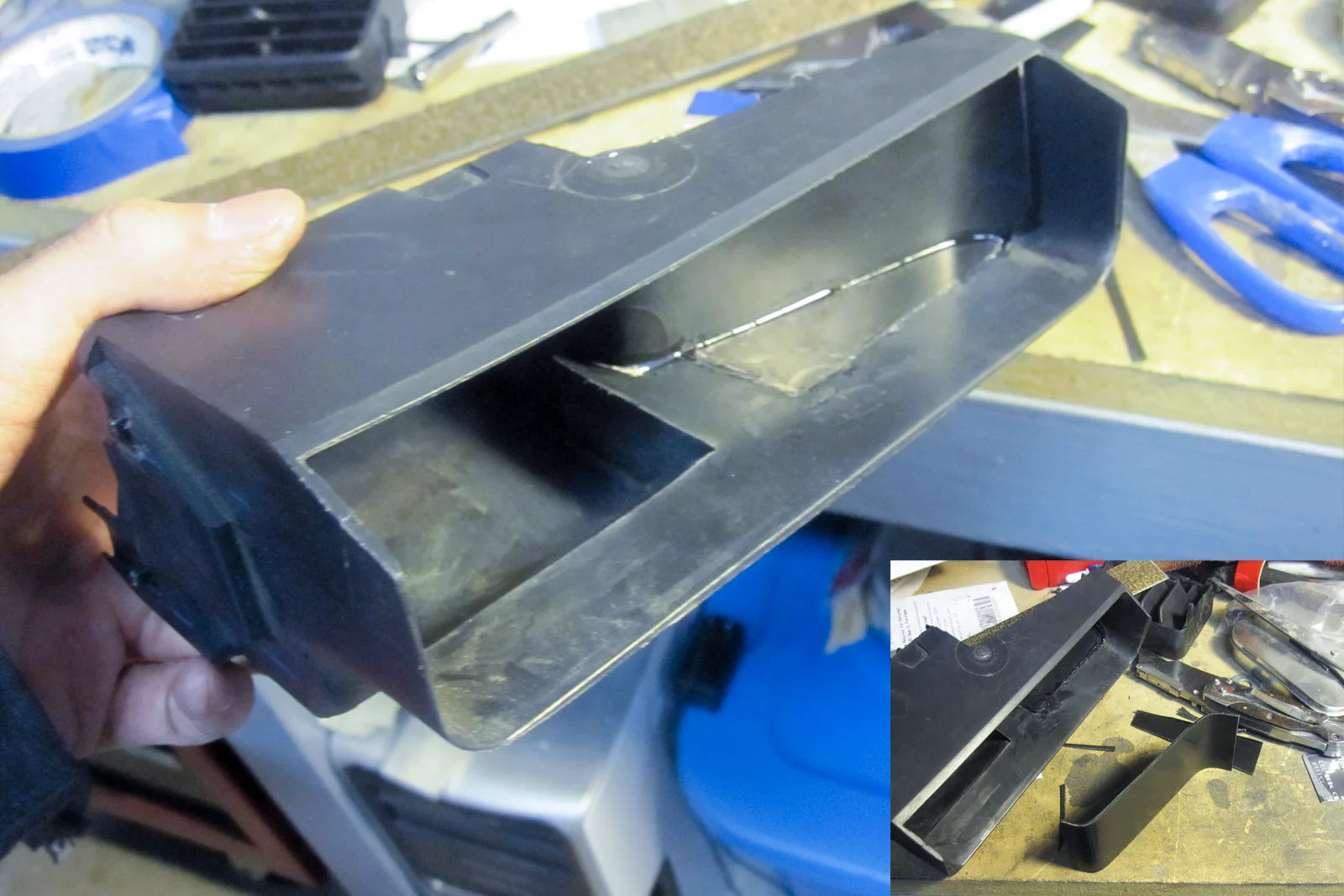
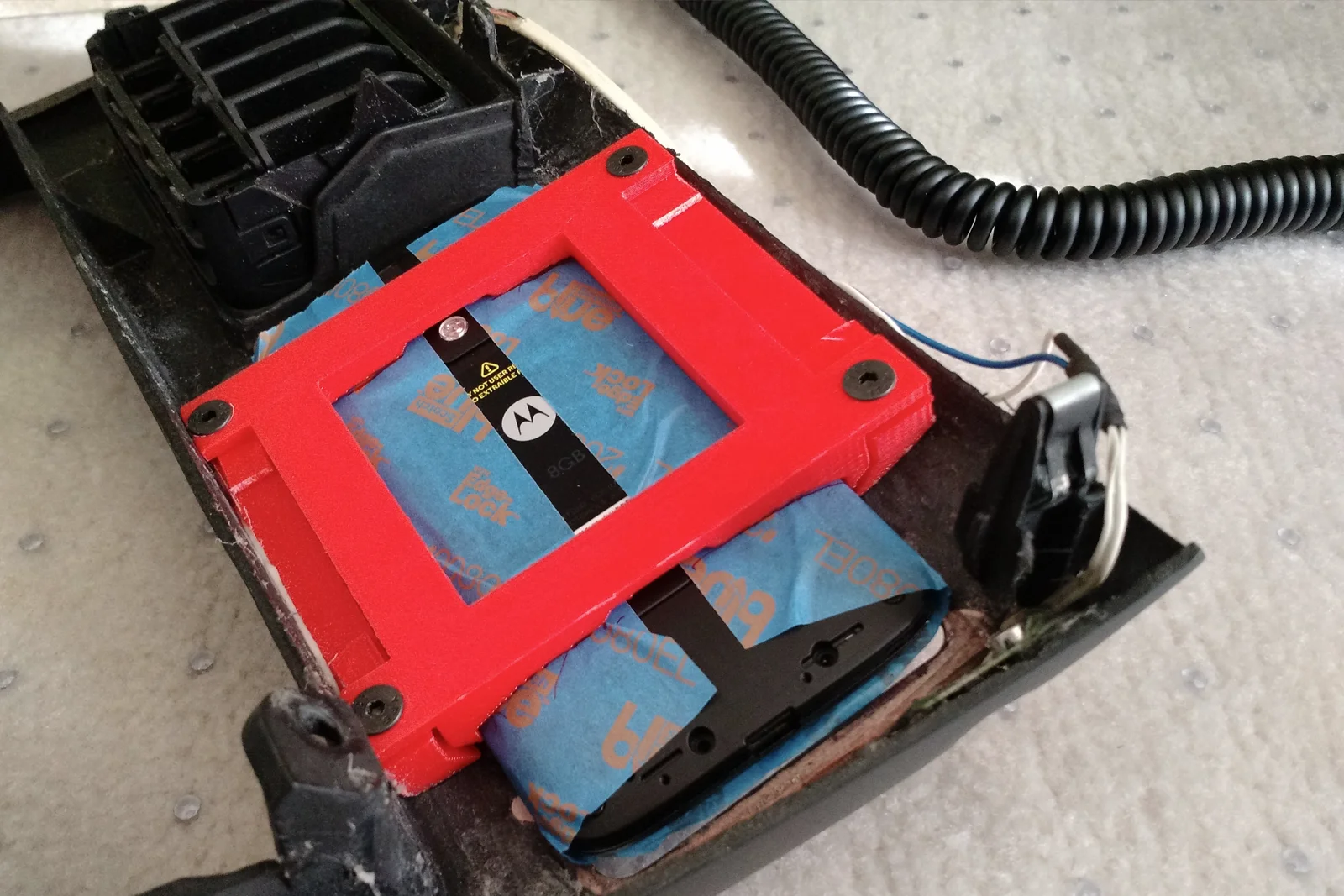
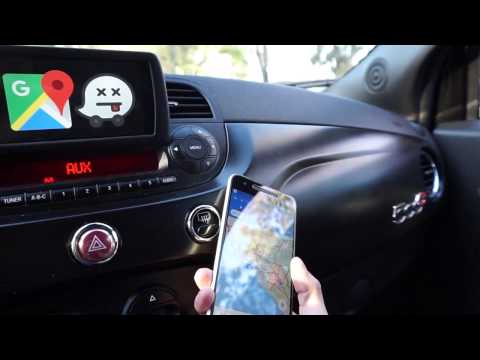
Cut the factory AC duct and fabricated a new wall from sheet ABS to redirect all airflow through the right vent only, preserving full climate control. Enlarged the left vent opening to fit a Moto G smartphone in landscape mode. Designed a mounting bracket in CAD, 3D printed it contoured exactly to the phone geometry for rattle-free mounting.
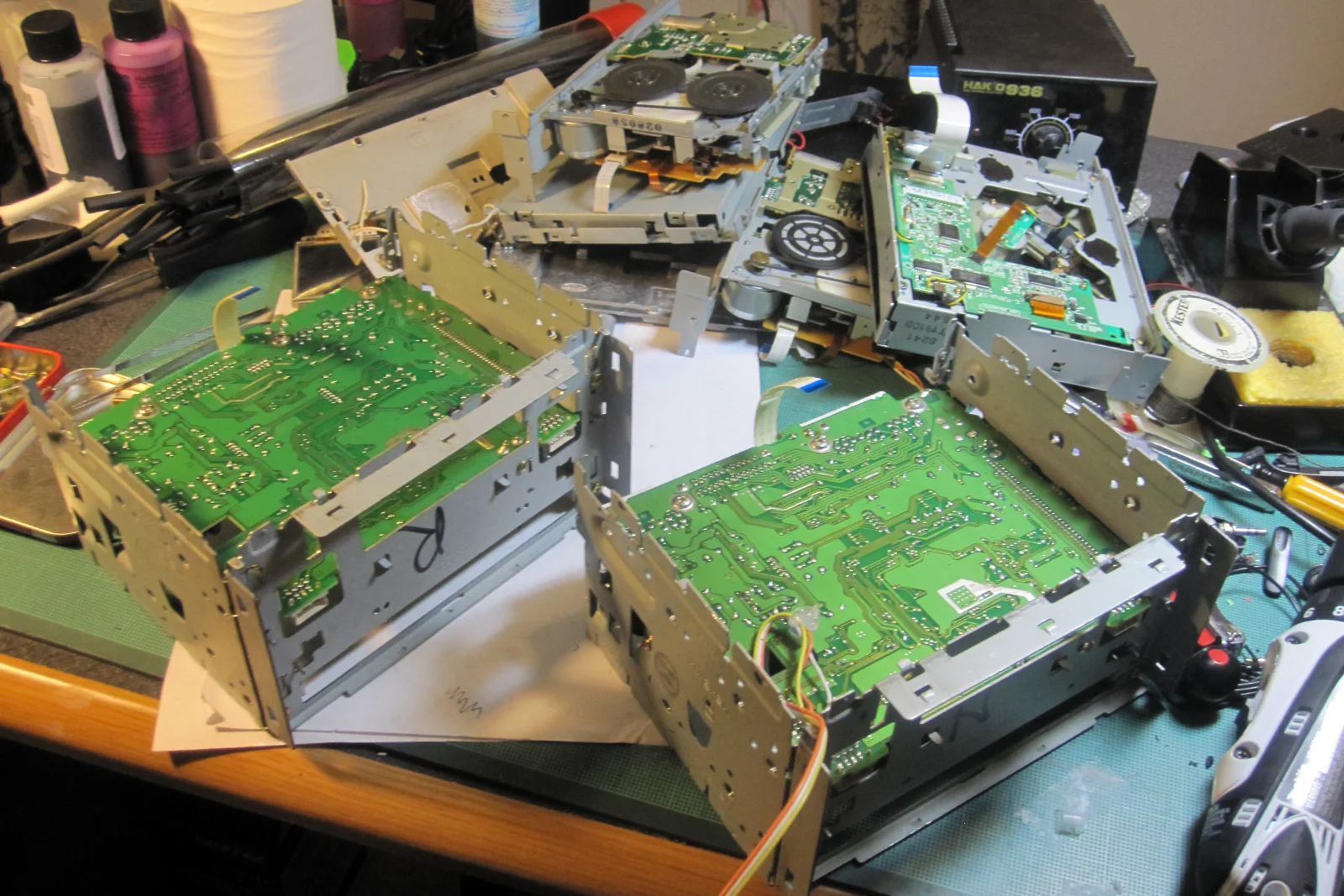
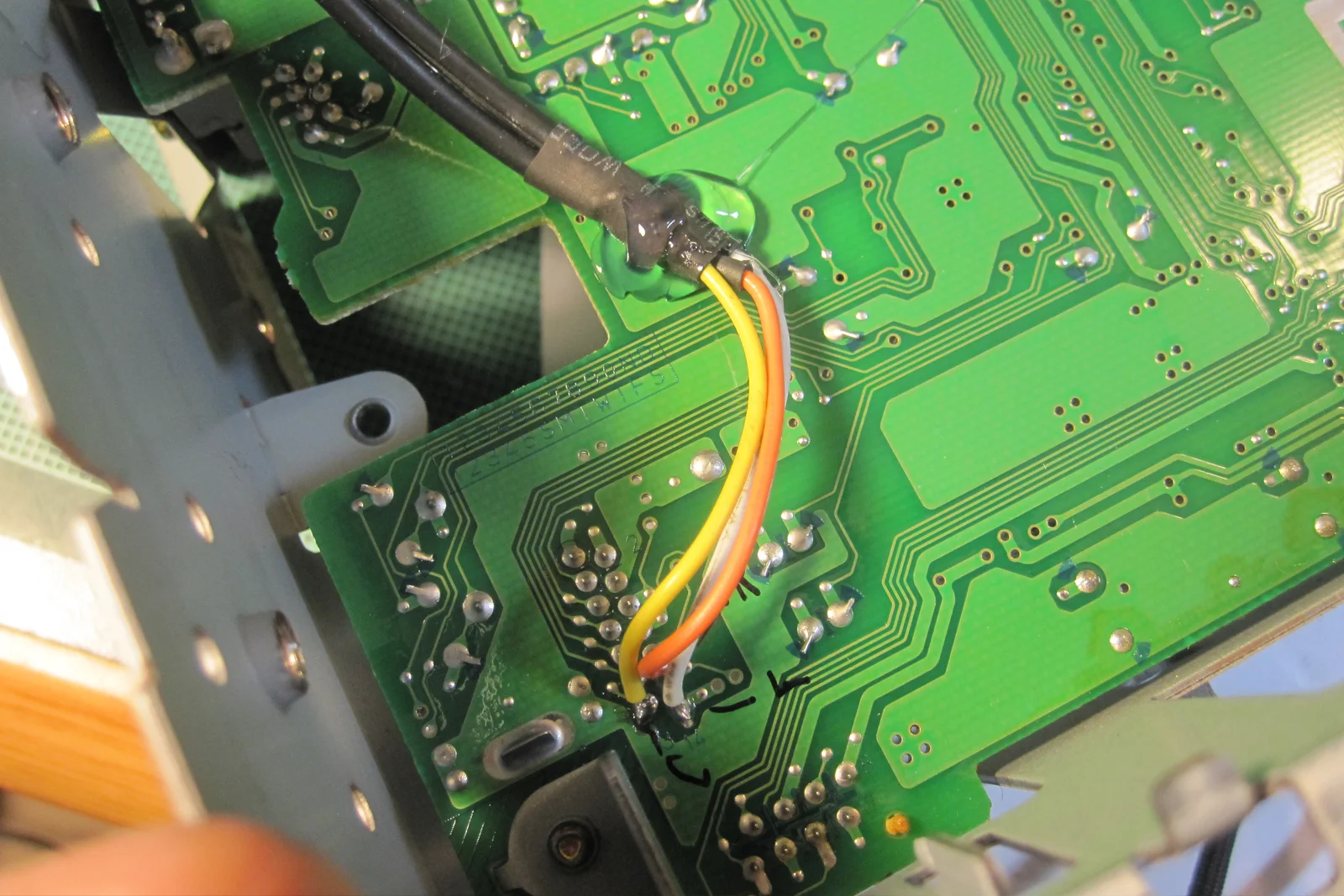
Getting audio into the factory head unit required getting inside it. The Tacoma's head unit had no aux input. Disassembled it to the PCB level and traced the signal path from the internal CD player to the amplifier. The audio signal passed between boards via a ribbon cable. Blocked the relevant contacts on that ribbon connector with vinyl tape, interrupting the CD player signal path without cutting any traces. Soldered new wires at the same intercept point to inject external audio directly into the amplifier input. Reassembled the head unit. The factory radio now accepted audio from any external source through a hidden input that didn't exist in any service manual.
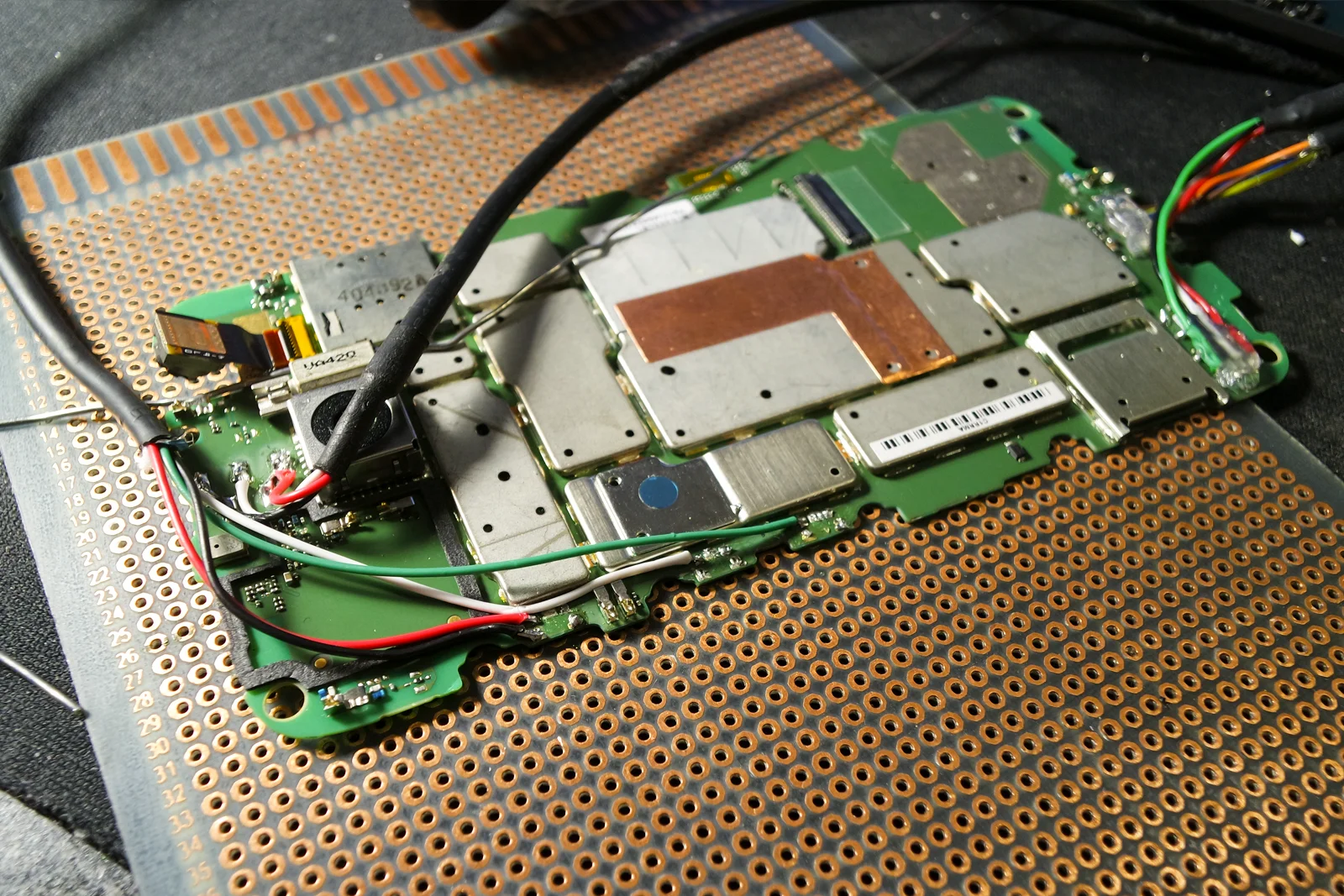
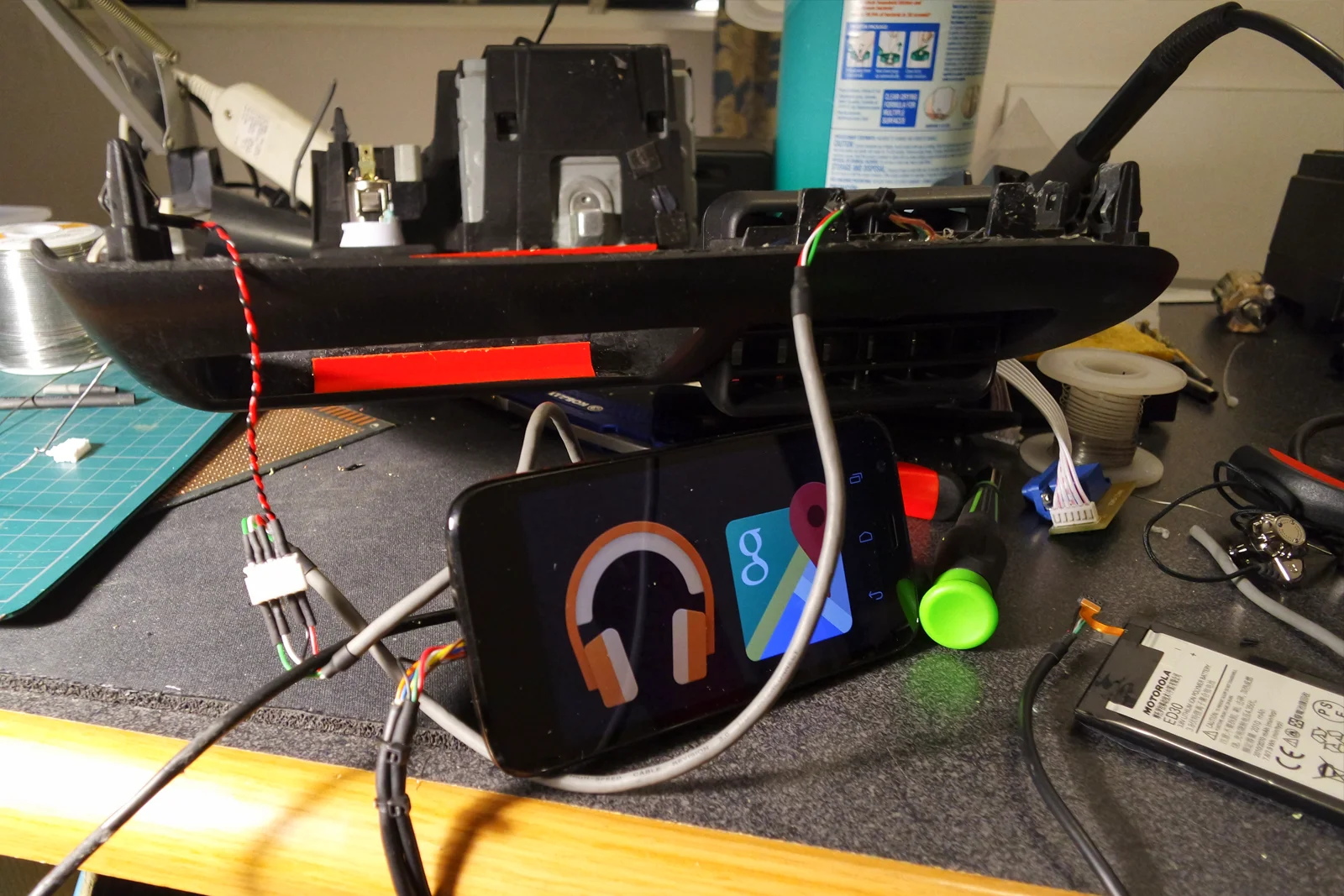
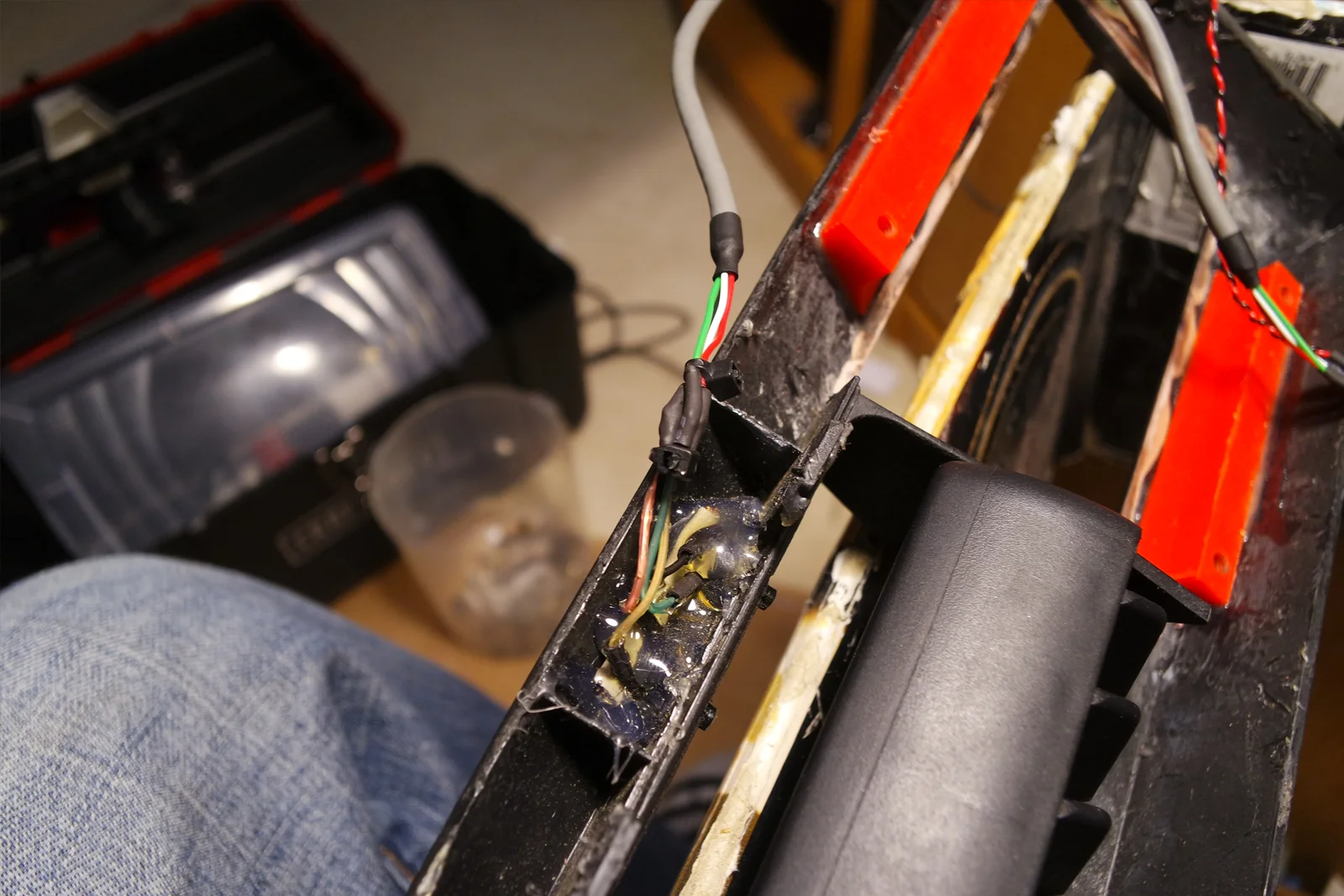
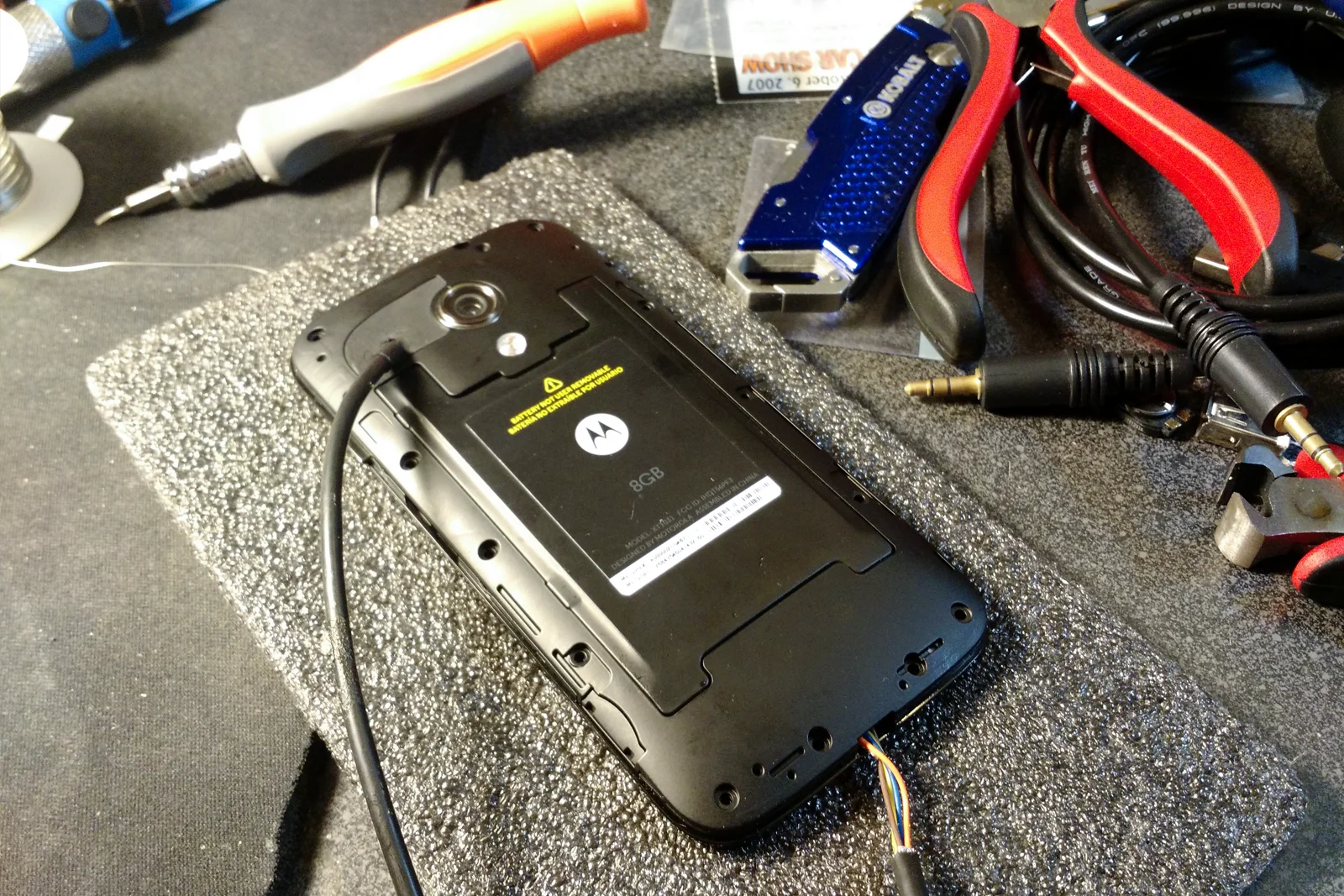
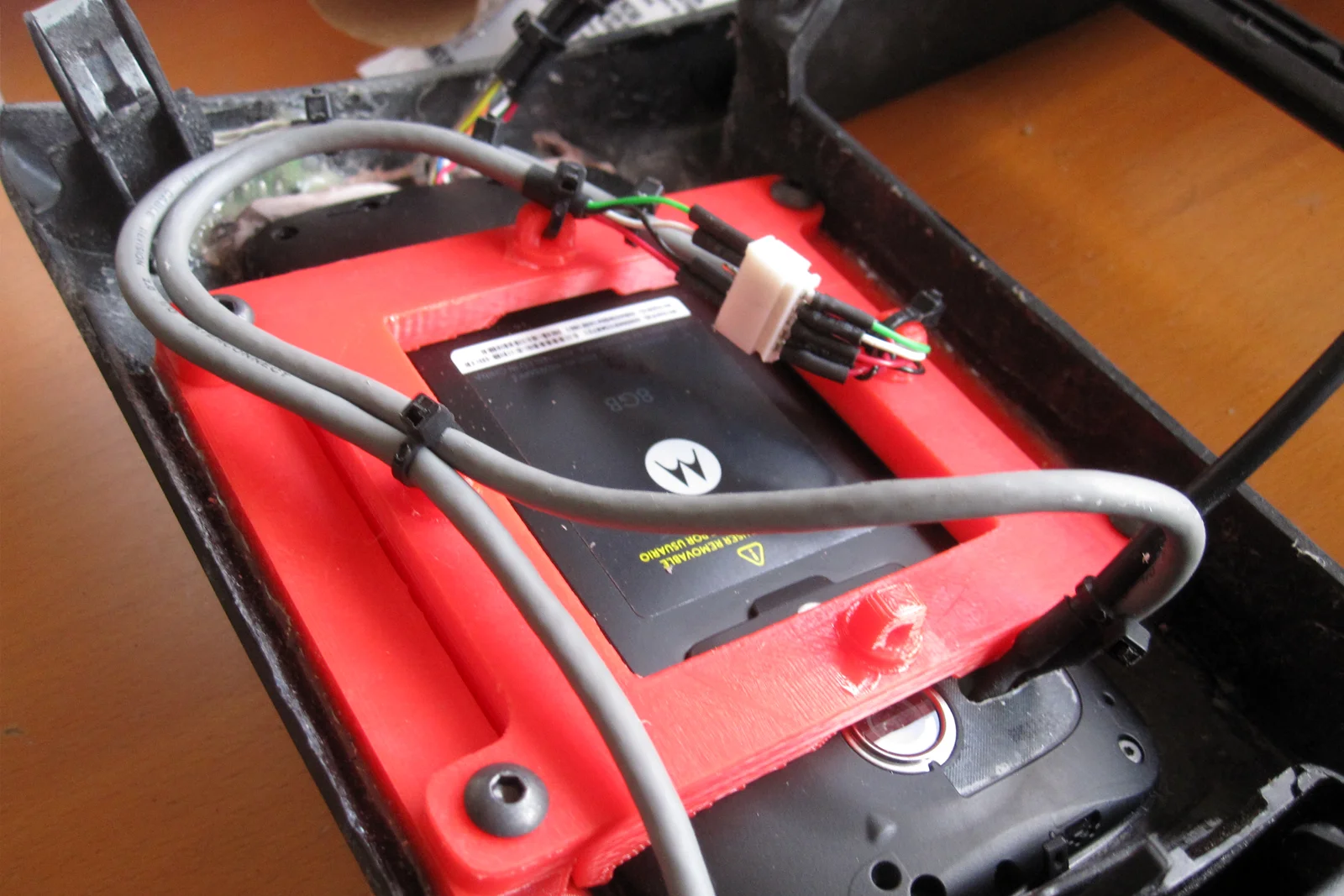
The Moto G required complete hardware disassembly. Wired external push buttons for power and both volume controls, routed through a custom harness to the back of the dashboard. Mounted the hidden buttons inside the right AC vent slats, accessible only by flipping the louvers to the extreme position, which kept them invisible during normal use but reachable when needed for bootloader access or forced reboot. Relocated the microphone to the trim bezel for hands-free voice input. Wired the headphone output pins and USB pins into the same harness so all connections accessed from behind the dash.
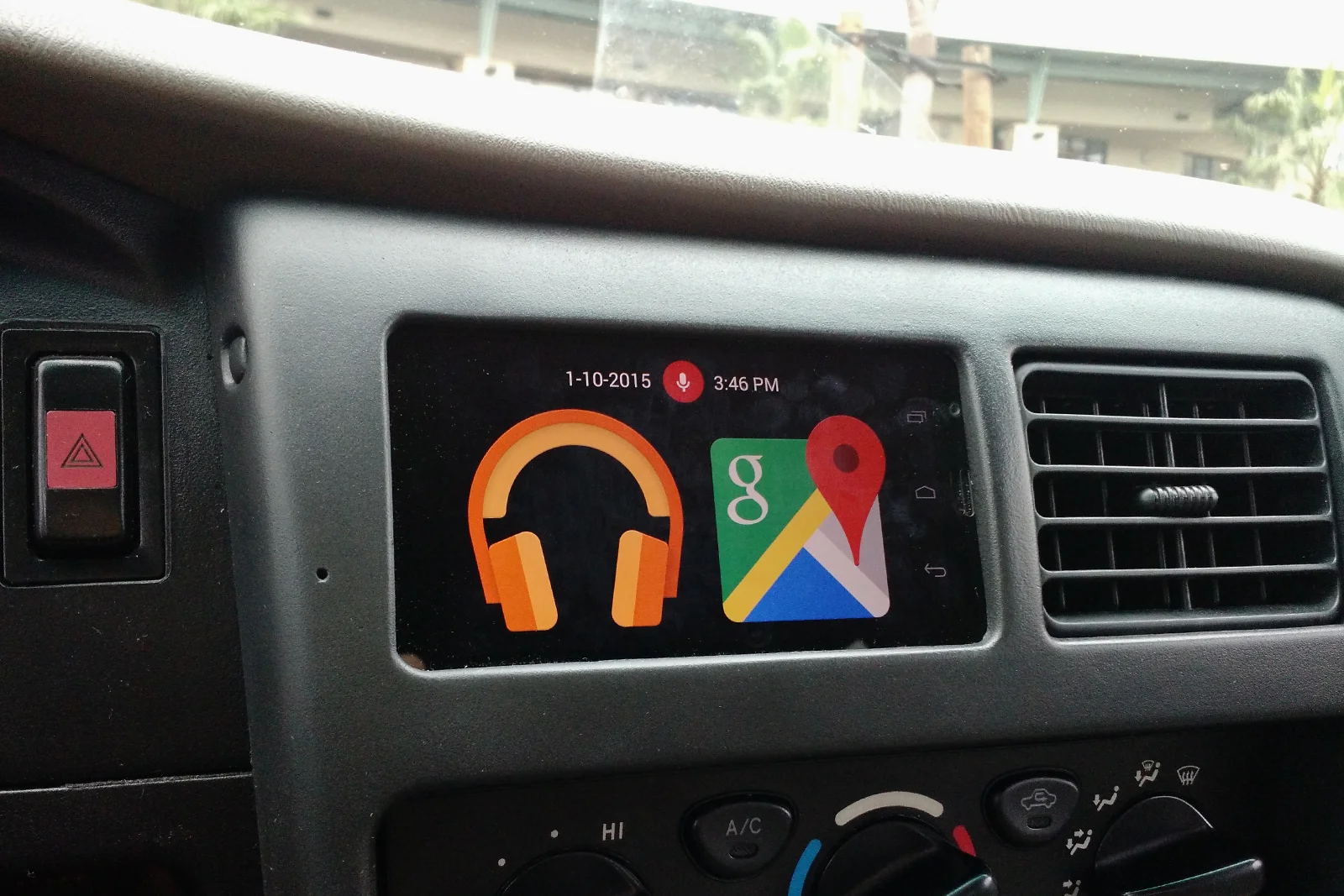
Installed a custom launcher locked to landscape mode with three oversized controls spanning the full screen: music, navigation, voice command. Toggling between them required a single large tap. Every UI decision was made for a driver's peripheral attention, not a passenger's focused interaction. Body filler bezel, sanded, matte black paint. Looks factory.
Generation 3: Fiat 500e, Thermal Engineering, Parametric CAD, and Full Automation
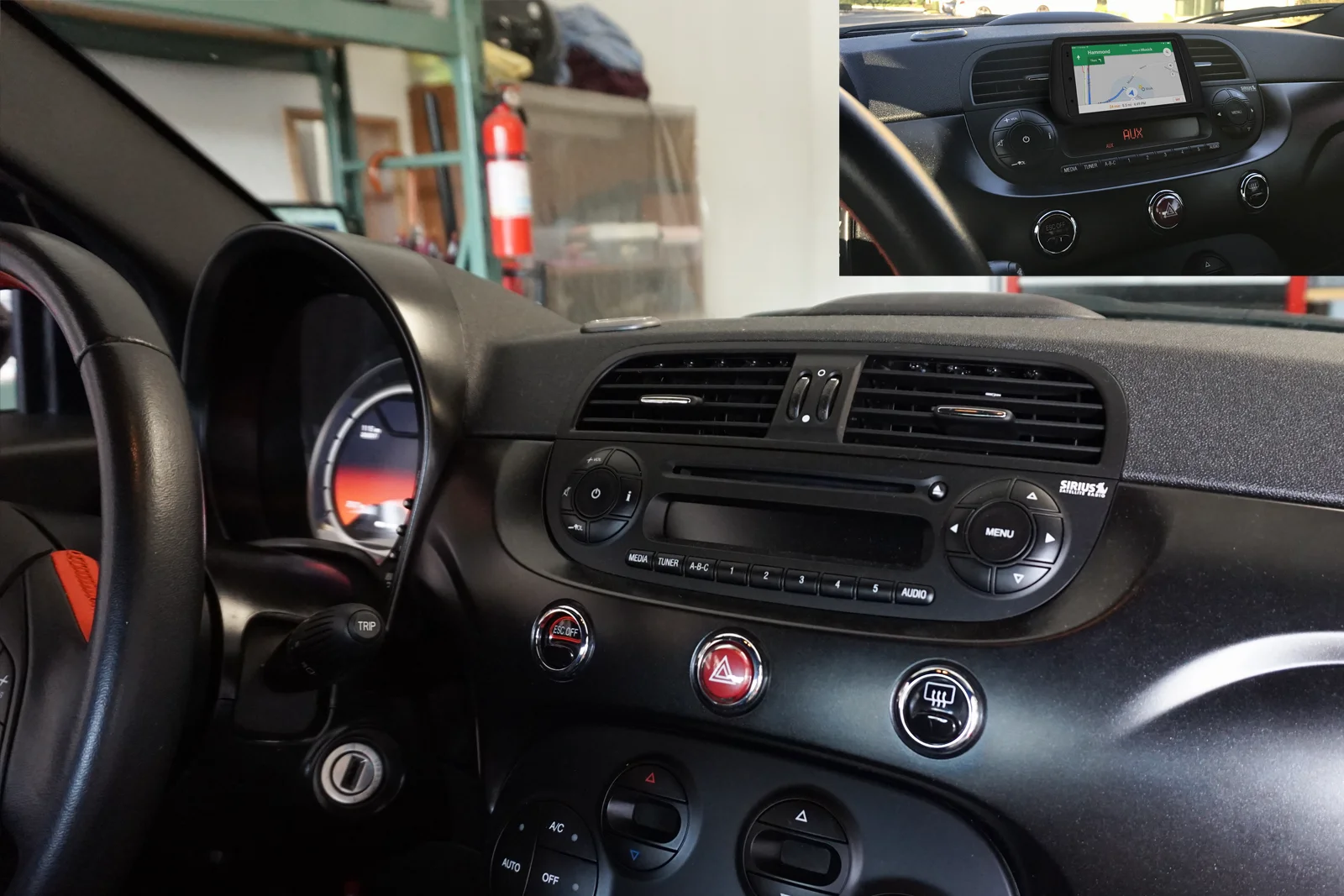
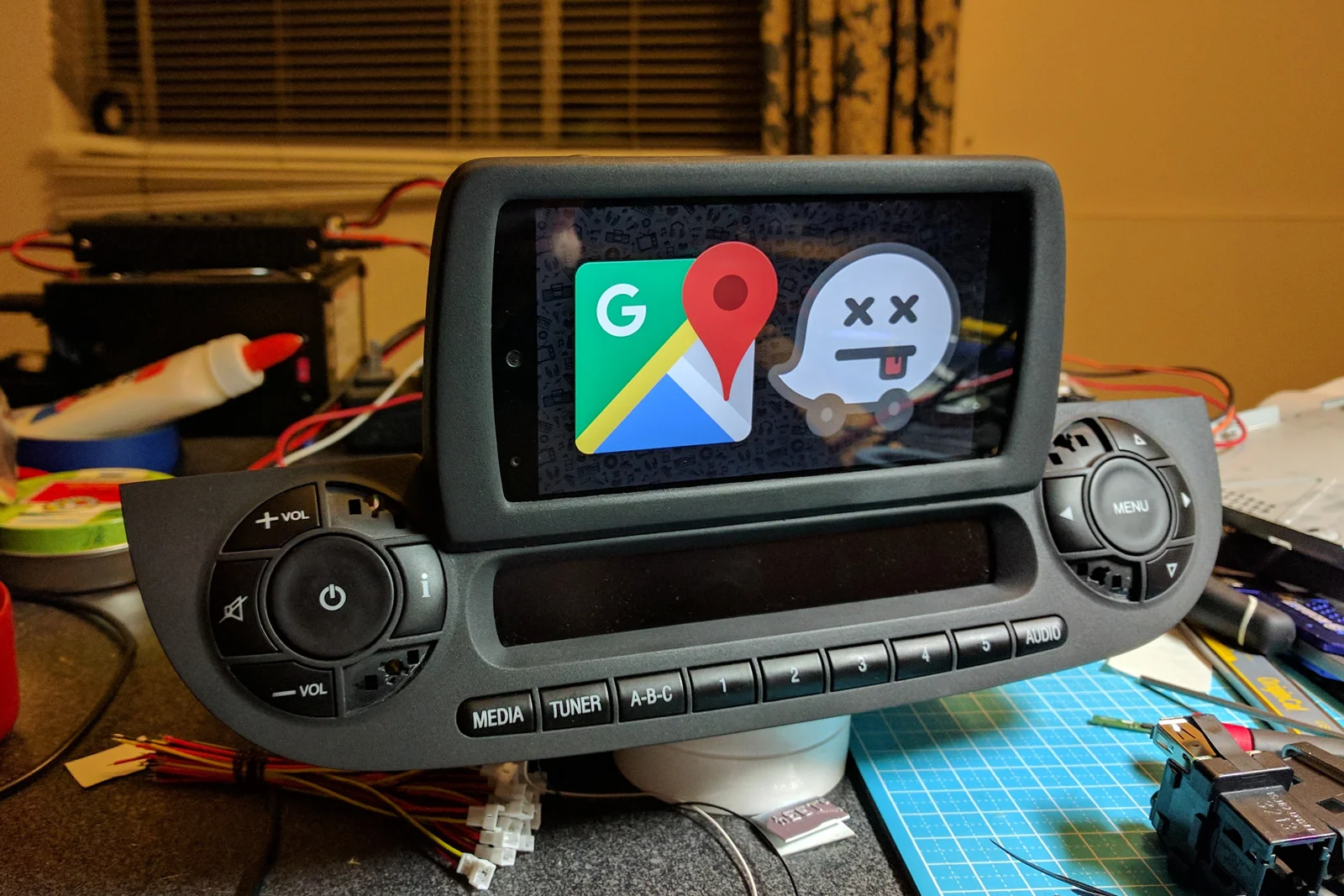
The Fiat 500e had no double-DIN slot, no relocatable head unit, and no AC vent large enough. The only workable mounting point was the factory CD slot loading mechanism, a narrow opening in the head unit face with a metal frame behind it. Everything had to attach to that frame and fit within the space above the dashboard, protruding upward in the style of modern factory screens.
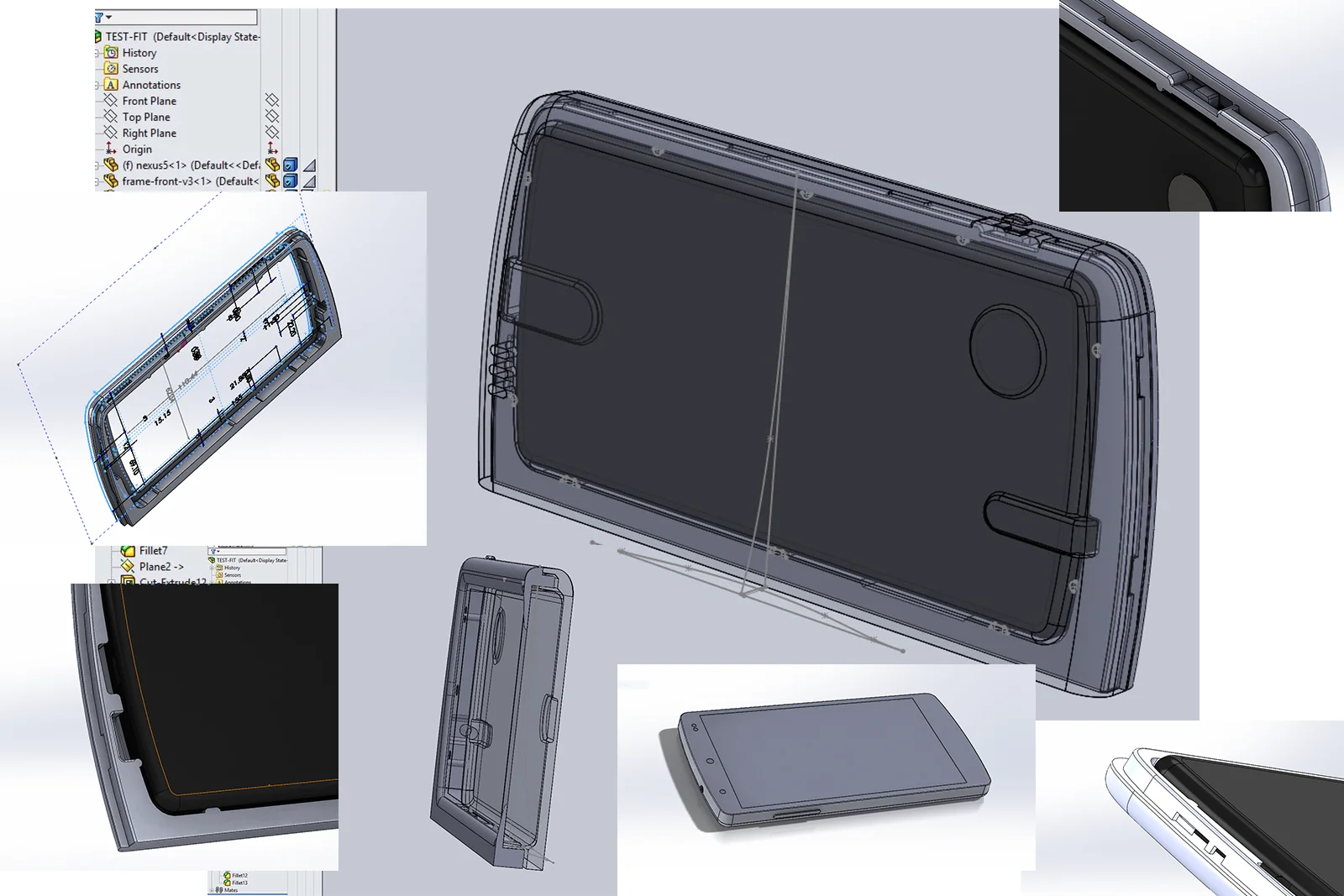
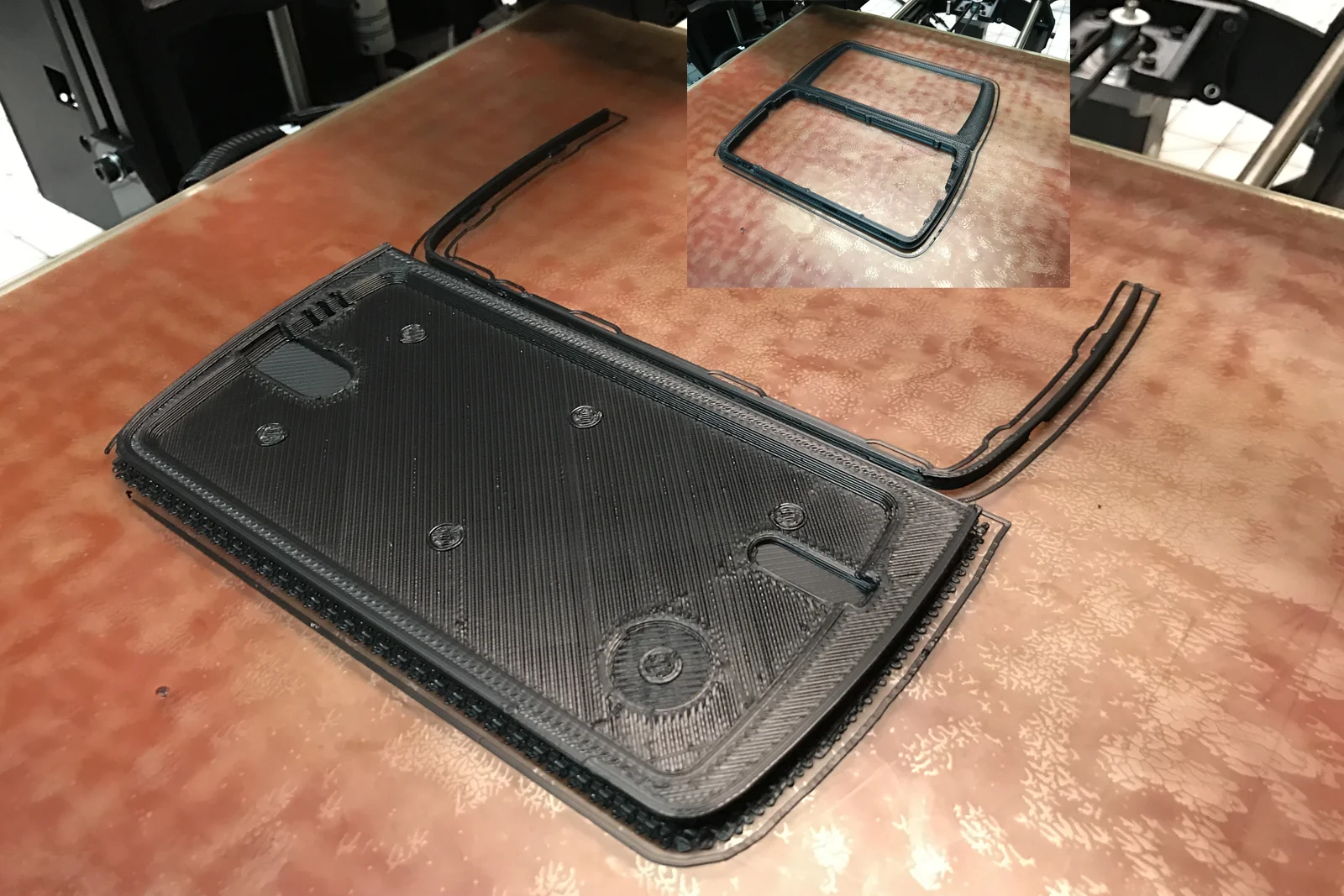
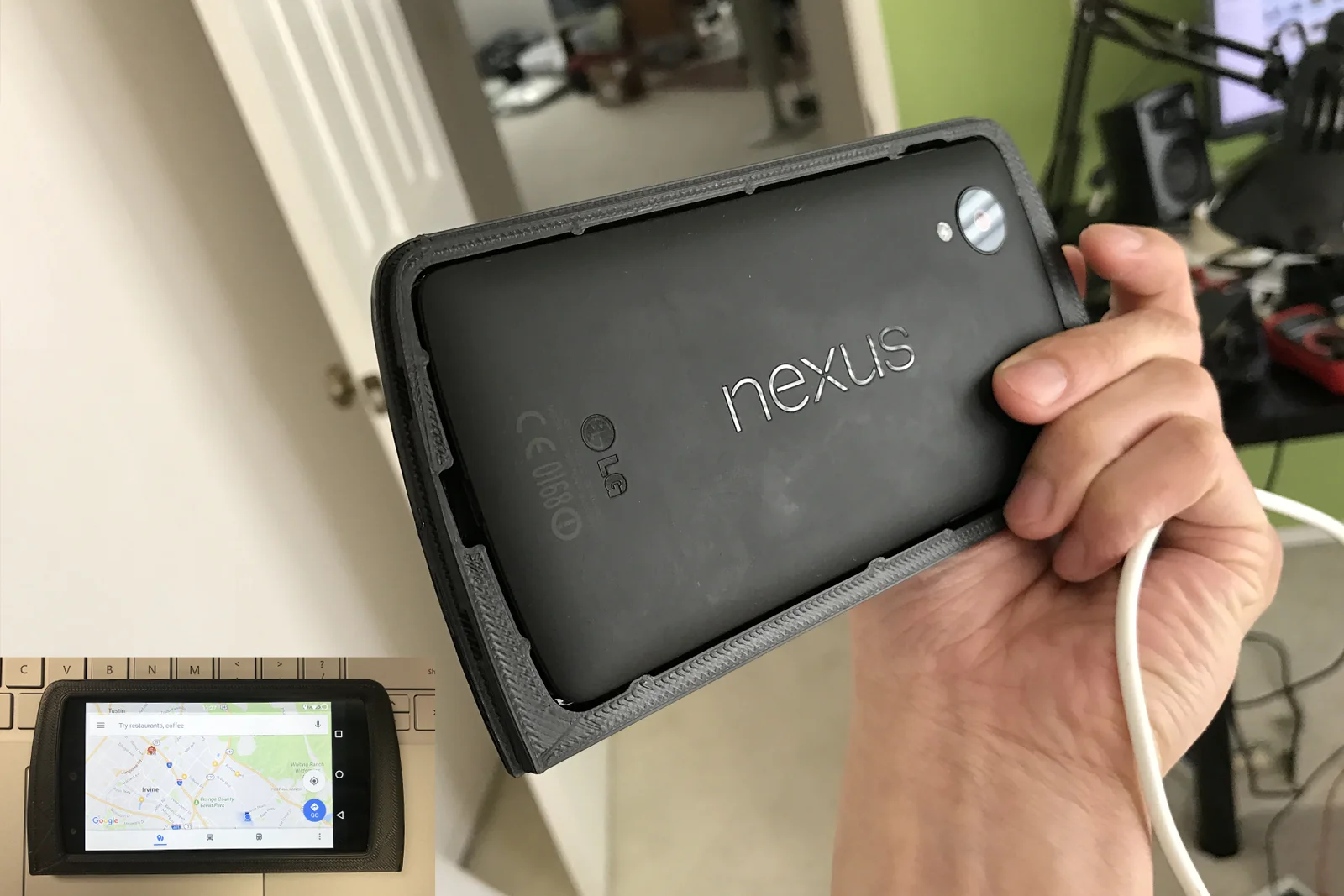
Modeled the Nexus 5 in SolidWorks. Designed the full enclosure parametrically around it, designed-in tolerances, alignment features, cable strain relief, and a mounting bracket that attached directly to the CD slot metal frame. 3D printed a concept prototype, superimposed a render over a dashboard photo to evaluate proportions, validated fitment with the phone before cutting anything on the car.
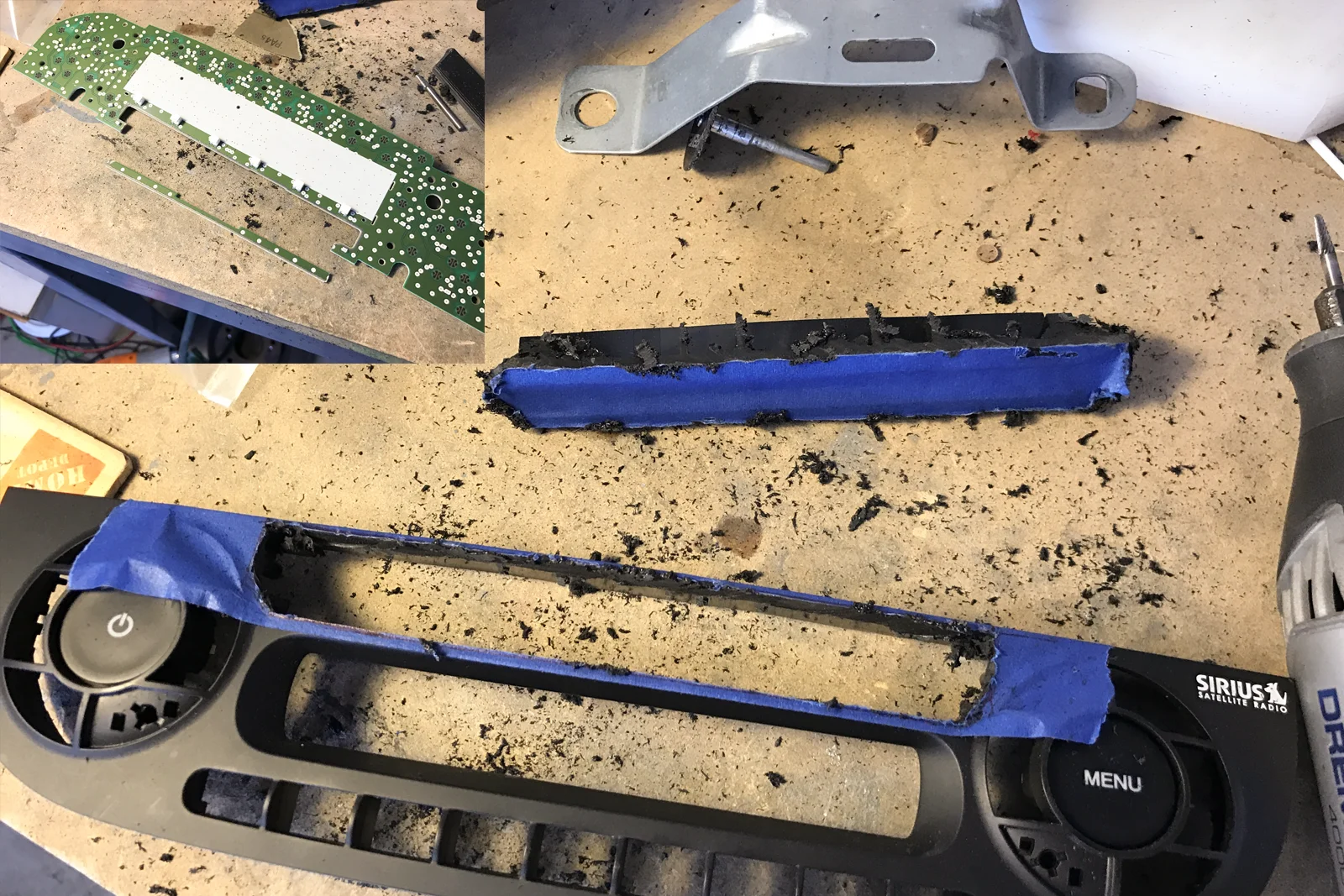
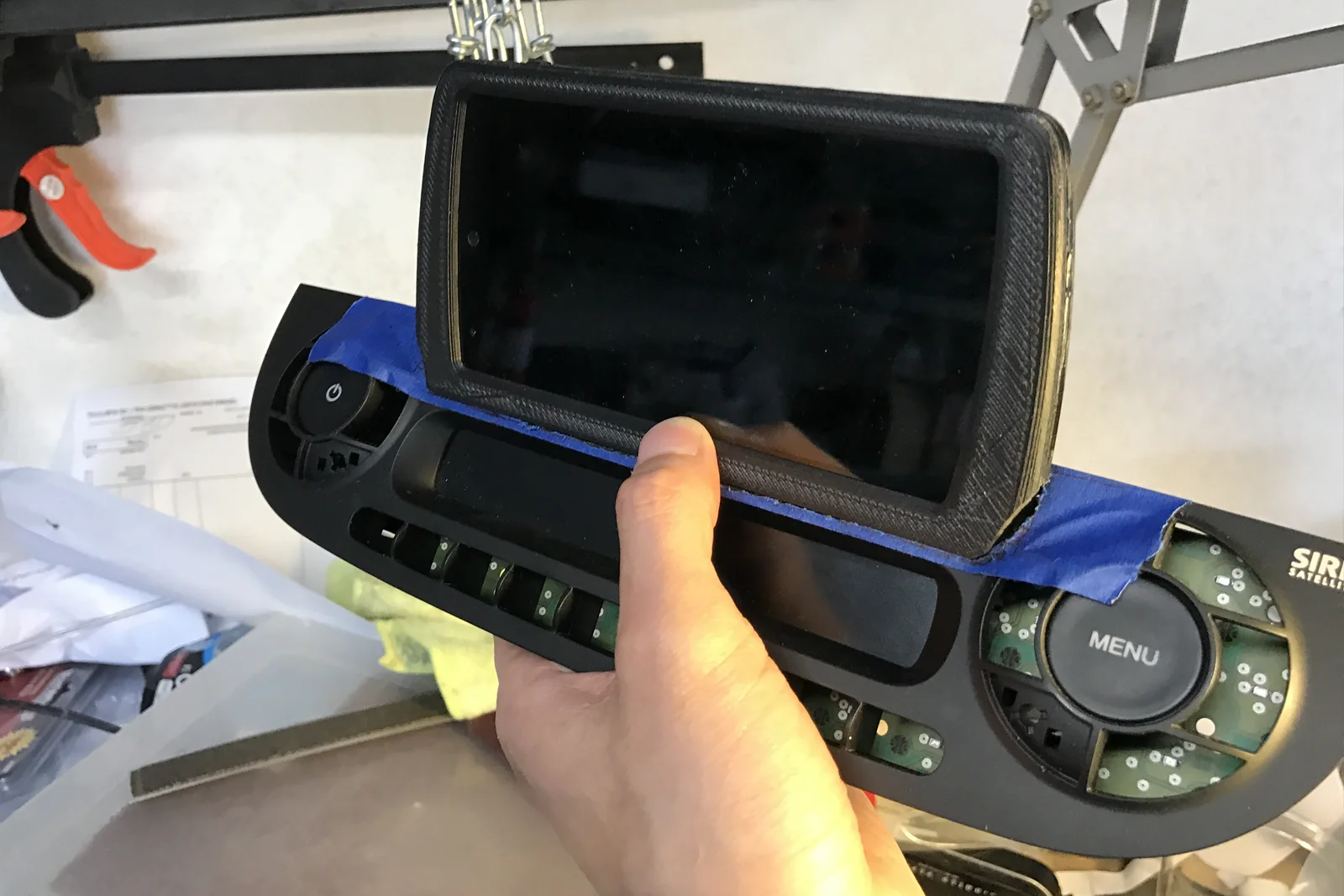
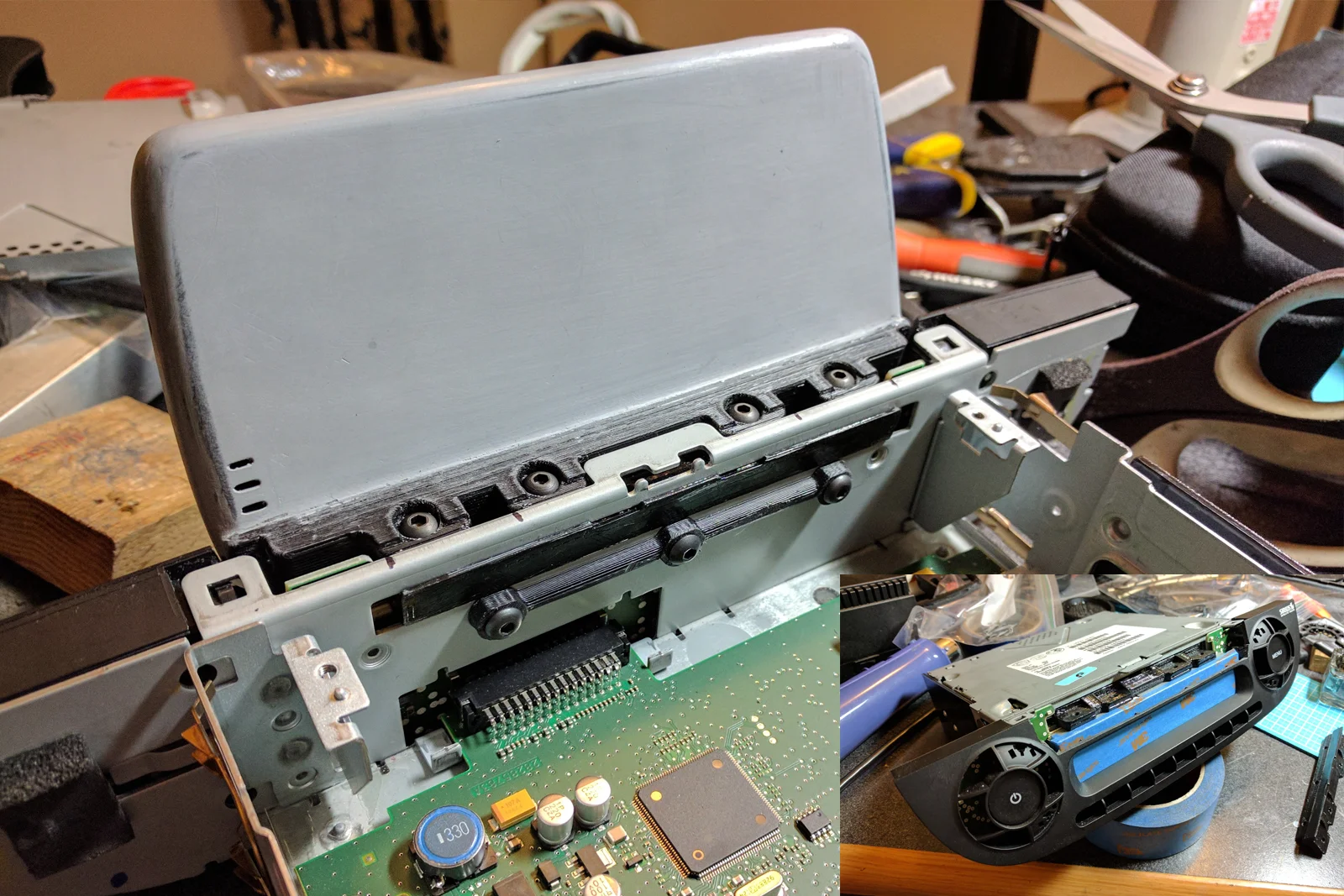
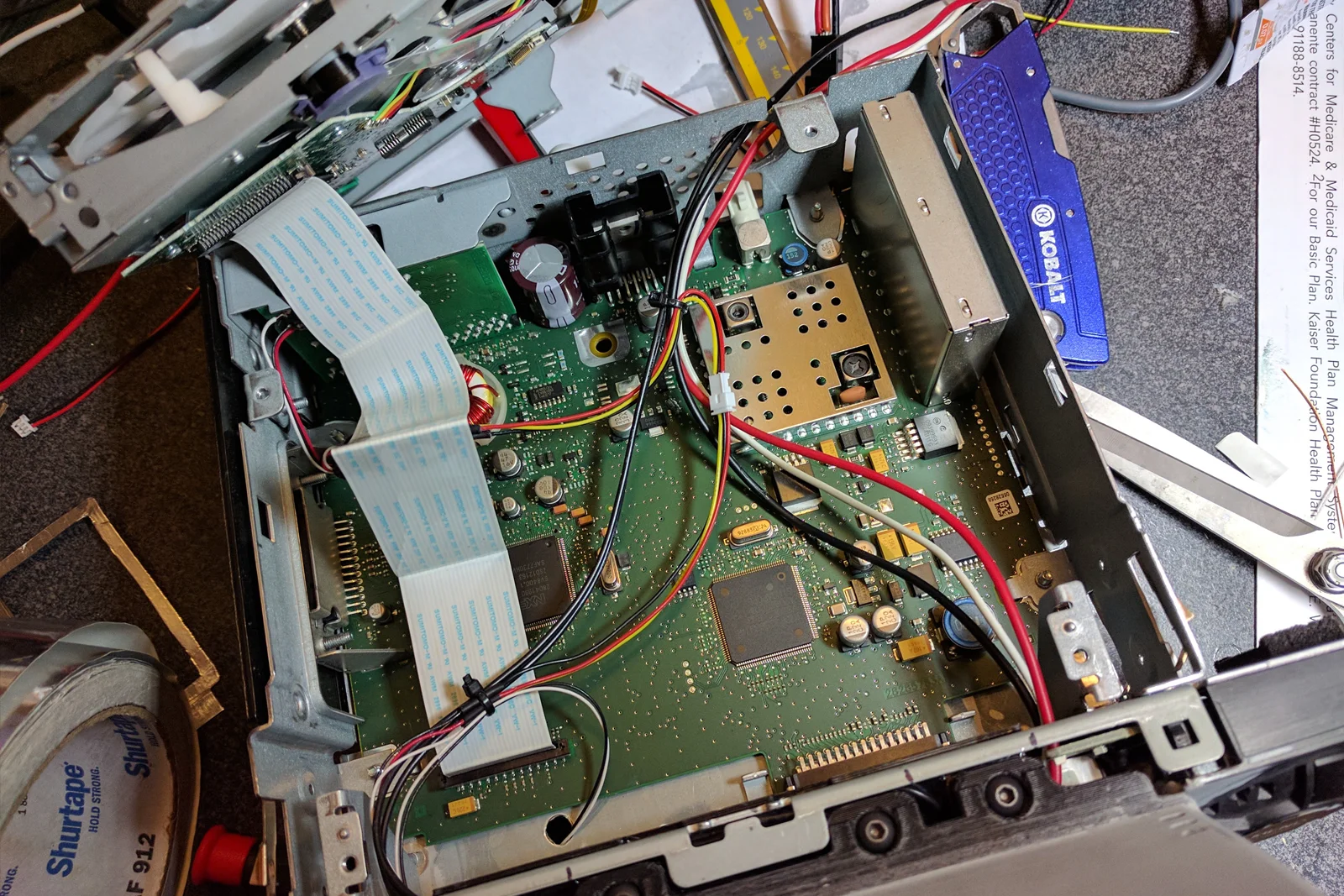
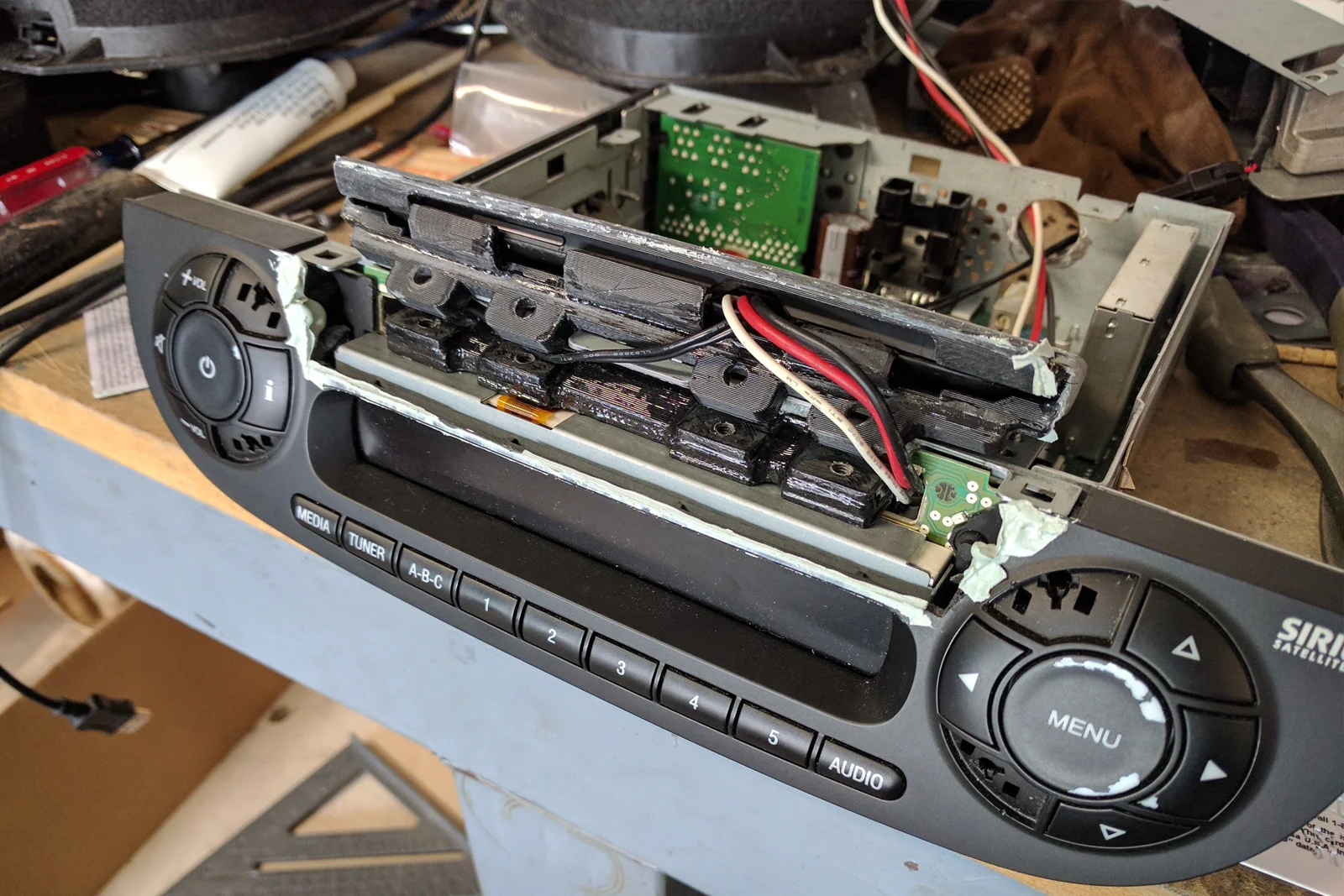
Removed the factory head unit face plate, cut away the button circuit board around the CD loading slot without affecting any functionality, and installed the mounting bracket. Reinstalled the head unit to verify clearance in the full dashboard assembly before committing to the electronics work.
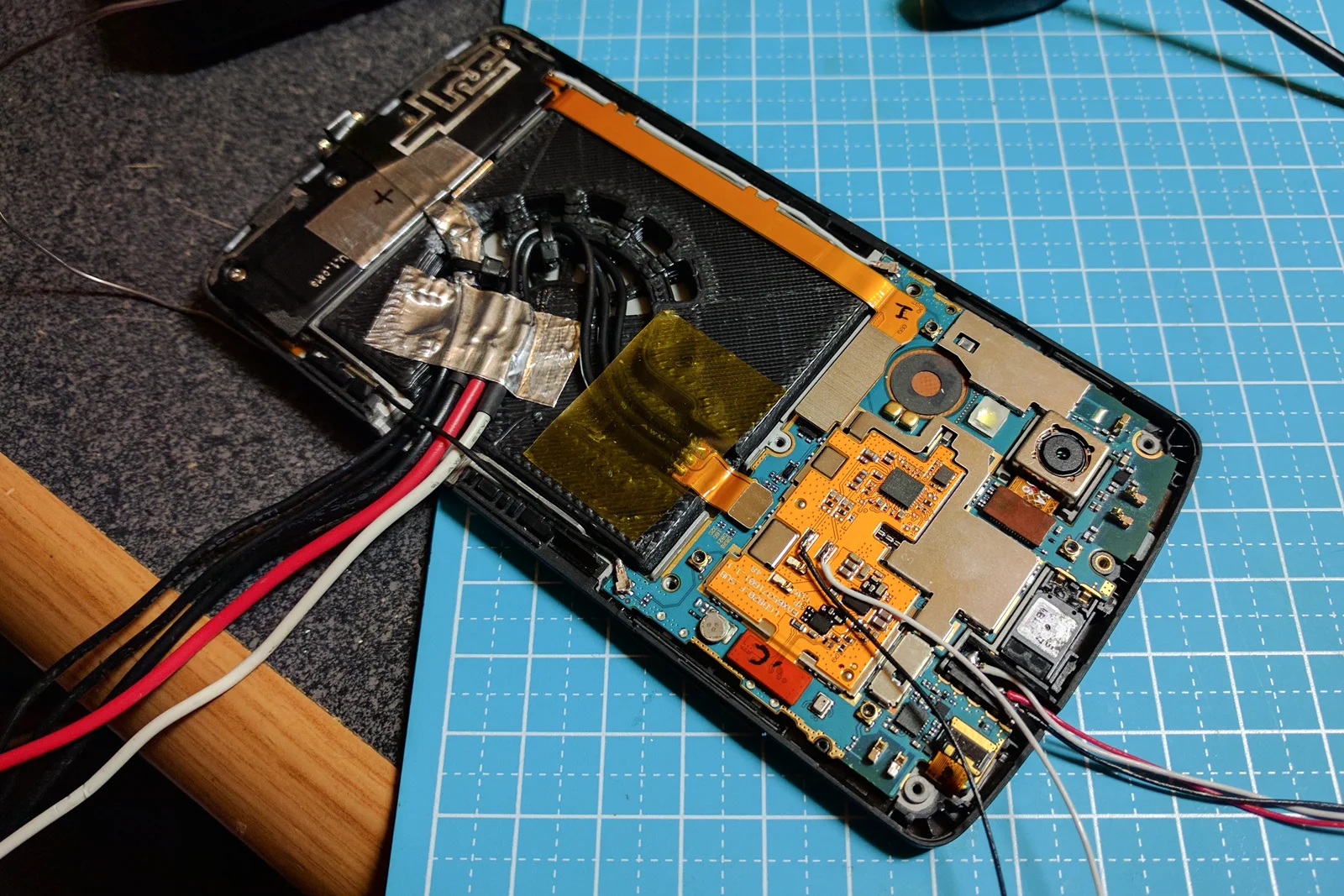
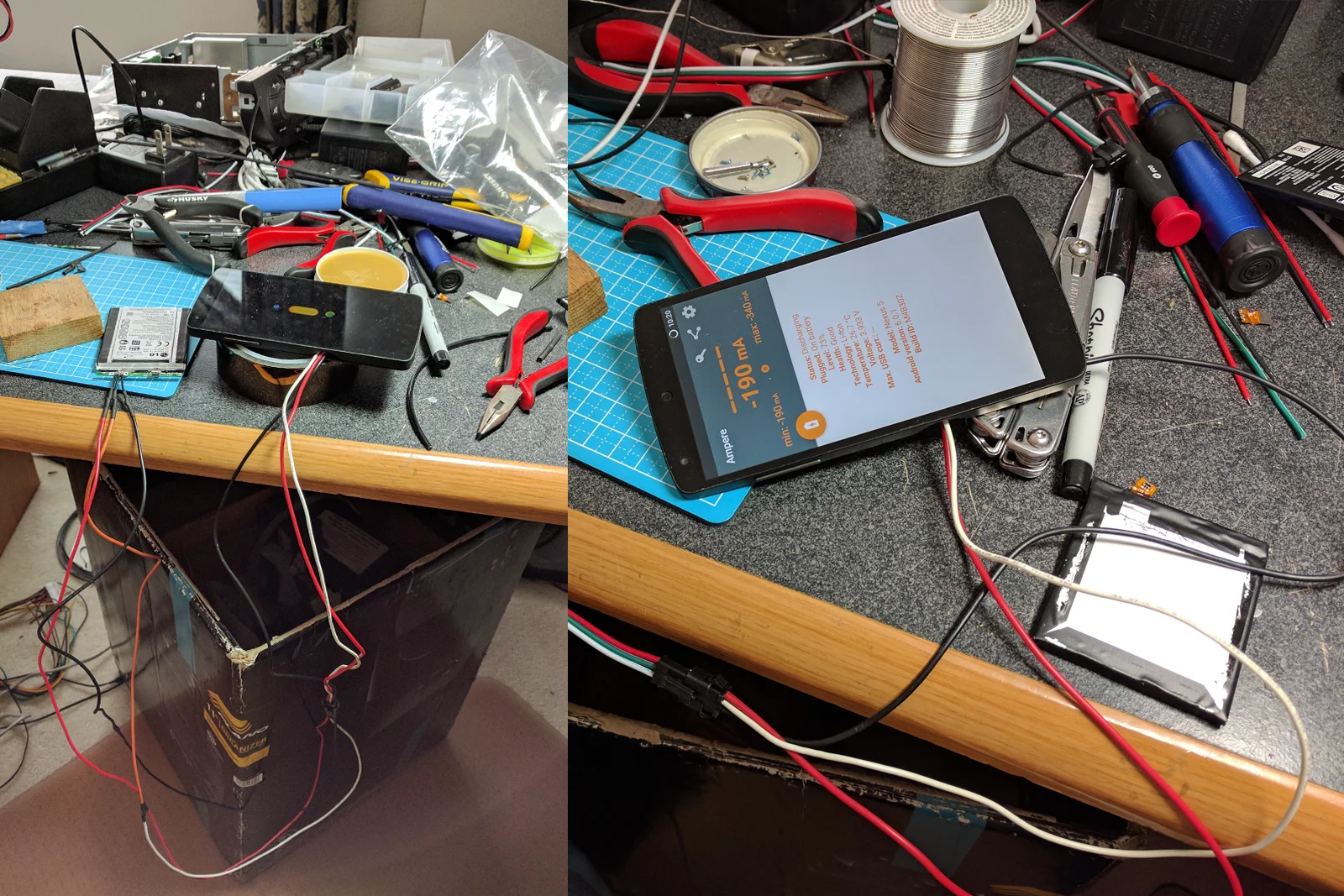
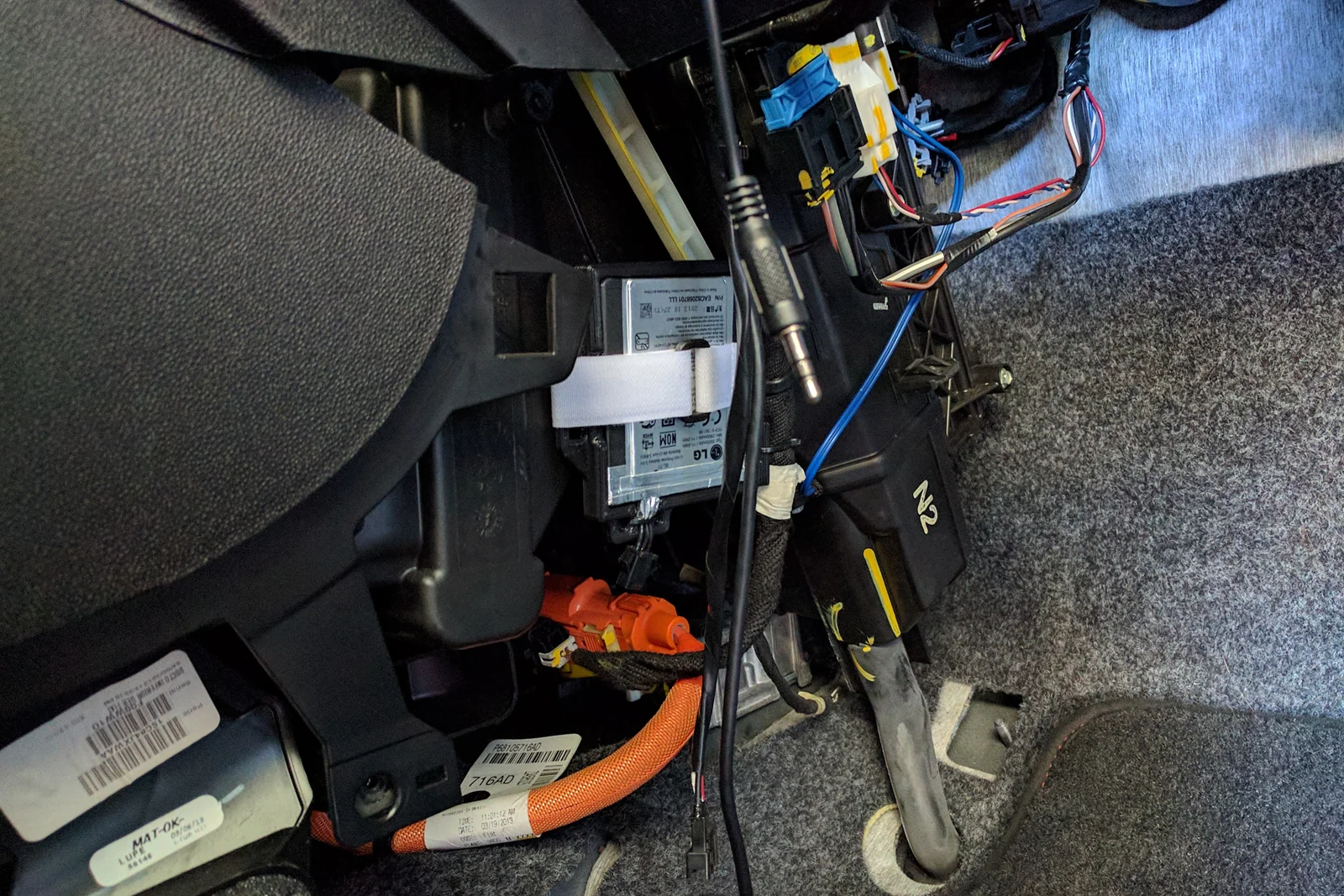
Thermal management was the hardest constraint. A phone in a tight enclosure on a black car dashboard in Southern California summer sun will fail prematurely, the battery is the most temperature-sensitive component and it sits directly behind the screen taking the full solar load. The solution was to move the battery out of the phone entirely. Disassembled the phone and designed a 3D printed dummy battery insert, same form factor as the original battery, which served simultaneously as a mechanical placeholder maintaining the phone's structural integrity, a wiring harness anchor, and the physical routing point for the battery cable exiting the phone body. The actual battery was relocated to the passenger footwell below the dash where temperatures are significantly lower even when the car is parked in direct sun.
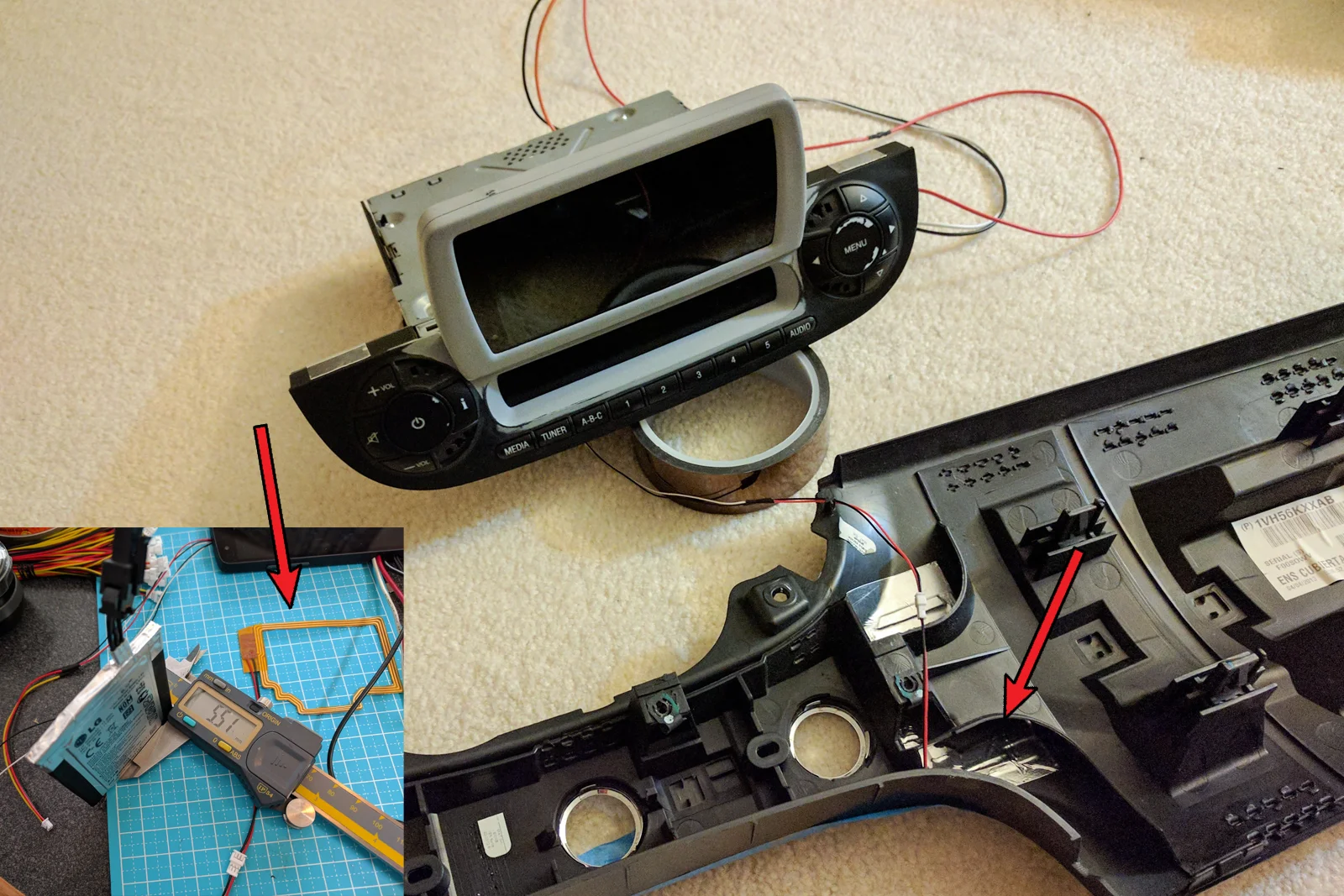
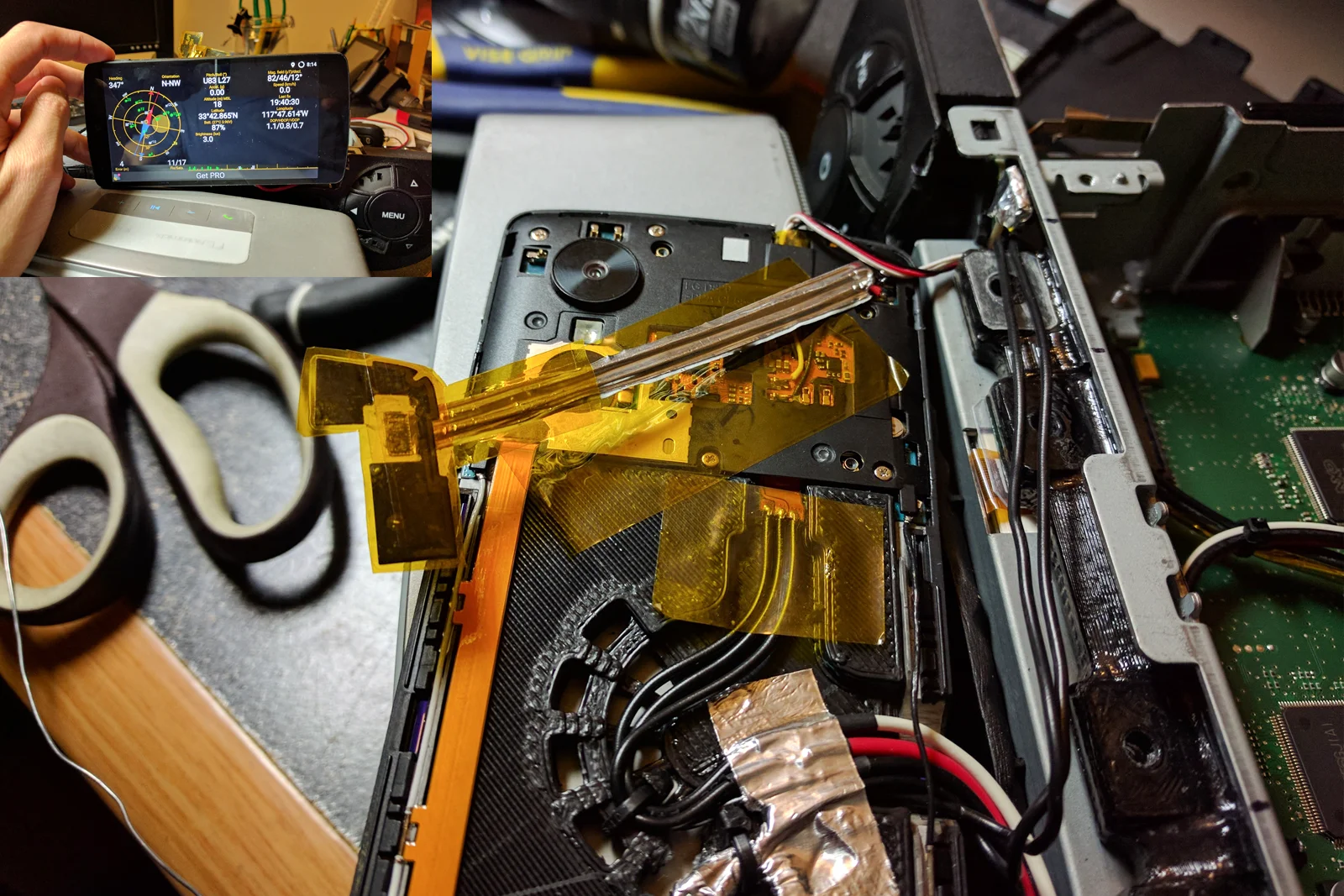
While the phone was disassembled, the NFC antenna and GPS antenna were both relocated from their stock positions inside the phone to the underside of the interior trim panel. Better GPS reception through the roof panel, and the NFC placement meant tapping a personal phone to that section of the trim panel could trigger actions or transfer navigation destinations to the vehicle system.
The automation system was built entirely in Tasker before any permanent phone modification, so every script could be tested and debugged with the phone still intact. The complete startup chain:
- State Recall: Attempt Bluetooth tether to last-connected phone (device ID stored from previous session).
- Fallback Logic: If 5 attempts fail, fall over to the secondary phone and attempt 5 times, whichever succeeds overwrites the cached device ID for the next session.
- Network Validation: Ping Google servers to confirm internet connectivity before proceeding.
- Media Autoplay: Launch Spotify and begin playback.
- Context Polling: Check system date, clock, and current GPS coordinates.
- Action Trigger: Launch Waze navigation to work or home for traffic prediction and ETA.
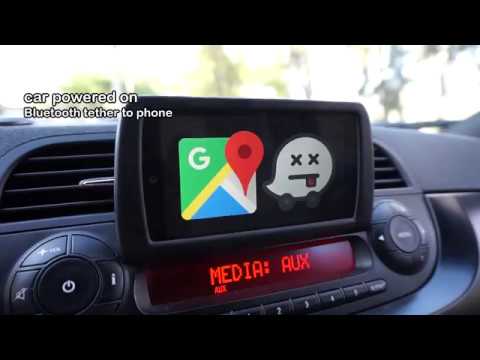
From key-in to streaming music with active navigation: zero inputs required. NFC tags in the car allowed a personal phone tapped to the trim panel to instantly transfer a navigation destination to the vehicle system. Custom UI with four oversized icons across two swipeable pages. A hidden easter egg in the Waze icon: tapping a specific area toggled a function mode and changed the Waze mascot face as visual confirmation.
This was during the early period of Apple CarPlay and Android Auto. Neither system at the time had this level of context-aware automation. The system was doing automatically what those platforms would not offer for years.